Category: Uncategorized

  • A Letter to Myself on New Year’s Day

    2026

    I have been reading Genesis 1:1 shaped mostly by my English understanding. Recently, I paused long enough to listen more carefully after seeing a post on the verse. I turned toward the Hebrew, and what I found there has quietly changed how I understand creation, light, and my own becoming.

    “In the beginning, God created the heavens and the earth.”

    That’s how we usually hear it.

    But the Hebrew reveals something far deeper, something that gently unsettles the idea of a finished moment.

    The very first word of Scripture is
    בְּרֵאשִׁית
    Bereshit.

    It does not open the story with something sealed and complete.
    It opens with movement.

    Not a period, but a threshold.
    Not a closed beginning, but an opening breath.
    Not a finished act, but an unfolding.

    Bereshit.
    In beginning.
    At the start of becoming.

    A more faithful translation would be, When God began to create.

    As if Scripture is whispering, Before there was form, before there was order, before there was anything solid at all…

    The earth was formless and empty.
    Darkness covered the deep.
    And the Spirit of God was hovering.

    Hovering, the way a pen lingers just above the page before the first sentence is written.
    Hovering, the way hands pause over a keyboard, sensing what wants to be born.

    At the start of becoming, God stepped into darkness, into formlessness, into empty space.

    From chaos, God began to create.

    And the first movement of the Creator was not structure.
    Not land.
    Not even the earth itself.

    The first word spoken was light.

    “Let there be light.”

    Not sunlight, which comes later in verse sixteen.
    This is something else entirely.
    Something deeper.

    In Hebrew, the word for light is אוֹר
    Or.

    It is formed by three letters.

    Aleph — א
    Vav — ו
    Resh — ר

    Together they spell light.

    Each letter carries meaning.

    Aleph is strength, source, God Himself.
    Silent, yet immense.
    The first letter of the Hebrew alphabet.
    The breath before sound.

    Vav is the nail, the connector.
    The joining point.
    Heaven touching earth.
    Meaning linking to meaning.

    Resh is the head, the beginning, direction, purpose.
    The place where movement knows where it is going.

    So light, at its root, is this
    God, the Source, connecting heaven to earth with intention and purpose.

    Light is not merely something God made.
    Light is God releasing His own nature into the void.

    Scripture echoes this truth again in 1 John 1:5
    “God is light, and in Him there is no darkness at all.”

    So the first act of creation was not making something external.
    It was God pouring Himself into the darkness.

    And this is where it becomes personal.

    If God’s first creative act was the release of light,
    and if you were made in His image,
    then you were created to carry that same light.

    Not to generate it, but to reflect it.
    Not to manufacture it, but to release it.

    This is why Jesus says, “You are the light of the world.”

    Everything God is by nature,
    you are called to express by assignment.

    Let that land.

    Everything God is by nature,
    you are called to express by assignment.

    God’s light brings clarity.
    Your creativity brings clarity.

    God’s light brings order to chaos.
    Your ideas bring order to confusion.

    God’s light reveals what was hidden.
    Your words, your work, your calling reveal what someone could not see on their own.

    You are not just writing.
    Not just imagining.
    Not just creating content.

    You are releasing light.

    This is why creativity is spiritual.
    Why it is powerful.
    Why it is transformative.

    This is why your ideas matter.

    And this is why resistance comes so quickly, especially in the mind.
    Why halfway through the work, a voice tries to tell you it means nothing.
    Why darkness attempts to return with confusion and doubt.

    But light restores clarity.

    Every time you co-create with God, you are doing what He did in Genesis 1.
    Speaking light into empty spaces.
    Releasing order into chaos.
    And darkness cannot survive where light is given room.

    When God began to create, His first word was light.
    And He did not stop there.

    He embedded that same light in you.

    So when you create, when you build, when you speak life, you are not merely doing work.
    You are fulfilling the Genesis mandate.

    You are a carrier of divine light.

    It is not just what you do.
    It is who you are.

    So go now.
    Release it however you are called.

    Write. Love. Work hard. Trust.


    Happy New Year, You.

    May the Light who hovered over the deep,
    and the Light who entered the world in flesh,
    find every place in you that is waiting to glow.

    Peace to your heart.
    Joy to your creating.
    Gentle wonder to all that is being born in you.

    May it be so.

    Hallelujah.

    JLK

  • The fullness of time- how to enjoy the moment during the Christmas season

    The fullness of time- how to enjoy the moment during the Christmas season

    It has been a day of passing time.

    Of crazy moments, of expanding demands and pressing issues, of too much to do and a scarcity of time, as we creep in traffic, climb phone trees, wait our turn to pay, rushing through the mundane and climbing carnal ladders.

    We need to be first in line but Christ asks us to go last.

    We have demands but Christ asks us to abide in peace.

    Worried with impatience and willful; we do what we don’t want to do and fail to do what God’s divinely assigned us to. At sunset we review and see;

    We’ve profaned the moment in our haste, blind to the inner mystery of Your working.

    Now in stillness we sigh, and release the truth; we covet time for our self.

    Living in scarcity we have failed to trust and believed the lie that God’s love could fail to provide the needed. We empty self and open cleansed hands and lift our faces.

    Whispering now, all sufficient Spirit have more of me.

    Still. Listening. Waiting. Hearts turned and in tune. We hear Love.

    Come.

    Peace, yes this is You.

    Power, yes this is You.

    Hope, yes this is You.

    Rest, yes this is You.

    There is joy, it overcomes weariness in a soul surge of worship.

    Spirit overflowing ready now in cooperation.

    We go, now yoked to Jesus our Rest, Savior, Beginning and End.

    Renewed to serve the Potentate of Time.

    Elisabeth Elliot writes in her book- Love has a price tag: Inspiring stories that will open your heart to life’s little miracles, “treating as meaningless that which is freighted with meaning. Treating as common that which is hallowed. Regarding as mere triviality what is really a divine design. Profanity is failure to see the inner mystery.”

    If you realize you are profaning time. Hit the reset button with these 3 steps.

    Confess and own your bad habits, attitudes, willfull impatience, selfish coveting of minutes and me-time and your fear that God is not sufficient to multiply and provide you daily all that you need to accomplish His purposes.

    Cleanse your soul by accepting God’s forgiveness and inviting “Spirit take more of me.” You don’t need a filling of Spirit, you need an emptying of flesh.

    Come to Jesus in Cooperation by taking up your cross and following where the Potentate of Time and the Beginning & the End will take you. Try to keep a “moment”dialogue through the day as you encounter your flesh rising up in panic, worry, fear, impatience, or self-coveting. Ask to see the lies you believe that engage a wilfullness to profanity (Failure to see the inner mystery of the moment.) Ask to “rest” in each moment that is a divine appointment. Continually worship with thanksgiving in mundane task, the practice of patience, and sharing the gift of the Christmas spirit which is sacrficial giving. “Then you will be able to test and approve what God’s will is—his good, pleasing and perfect will.” Romans 12:1-2

    “Come to me, all you who are weary and burdened, and I will give you rest. Take my yoke upon you and learn from me, for I am gentle and humble in heart, and you will find rest for your souls. For my yoke is easy and my burden is light.” Matthew 11:28-30

    christmas-is-not-a-time-nor-a-season-but-a-state-of-mind-to-cherish-peace-and-goodwill-to-be-plenteous-in-mercy-is-to-have-the-real-spirit-of-christmas


  • When you walk the road to Emmaus

    When you walk the road to Emmaus

    walk to emmaus

    WHEN YOU WALK THE ROAD TO EMMAUS

    Luke 24:13-35

    Did you hear this alarming news?

    46,471: Drug Overdoses Killed More Americans Than Car Crashes or Guns (CNSNews.com)

    drugs kill
    “Drug overdose deaths are the leading cause of injury death in the United States, ahead of motor vehicle deaths and firearms (deaths),” the Drug Enforcement Agency announced on Wednesday. In 2013, the most recent year for which data is available, 46,471 people in the United States died from drug overdoses, and more than half of those deaths were caused by prescription painkillers and heroin.

    It’s alarming.  A serious wake-up call.  Snoozing is no longer an option when you get this kind of news. That someone you knew, loved, shared life with has overdosed and died. That tragedy became personal this past week as our collegiate son lost a friend to an overdose.

    Questions immediately arose.  Disturbed, that heroin was that close to my son’s inner circle of life, we confronted him with frank questions. Distressed , we worried if we’d been naïve or distracted-majoring on the minors when the unimaginable of heroin was a real threat to his life and never discussed. Distraught, we grieved for his friend’s family. My troubled heart found a place of comfort from Luke’s account of Resurrection Sunday where two disturbed, distressed and distraught disciples found answers.

    The road to Emmaus is a picture of the aftermath of a traumatic experience. 

    Times when you think it’s all just a bad dream and you’re going to wake up but instead you find yourself in the reality of an emotional roller coaster ride you never wanted on and can’t get off.  This is the universal journey when death has come—to a person or a job or a marriage, or your good health, or a dream.  Something has died. And it changes the orientation of life.  What do you do now?

    The two disciples in Luke’s account began to walk home, trying to make sense of it all. Their hopes of the kingdom of God and in the Messiah they had given up everything to follow were ended in a brutal crucifixion. Jesus was dead and buried.

    They wandered home, suspended between yesterday and tomorrow. 

    Powerless to prevent the events or change their current situation. Wrung out—emotionally, spiritually and physically—by the troubling “what ifs”. These disciples were in what Richard Rohr calls “liminal space”—a particular spiritual position where human beings hate to be, but where the biblical God is always leading them. The Latin root limen literally means “threshold,” referring to that needed transition when we are moving from one place or one state of being to another. Liminal space usually induces some sort of inner crisis: you have left the tried and true (or it has left you), and you have not yet been able to replace it with anything else.

    Biblically this is:
    Abraham called to a land he did not yet know.
    It is Joseph in the pit or later prison.
    It is Jonah in the belly of the whale.
    It is David the shepherd anointed to be king.
    It is pregnant Mary.
    It is blinded Paul.
    And it is two disciples on the Emmaus Road.

    This journey is a time for overwhelming emotions and dangerous questions. Thank God we have each other!

    Like the disciples, when two like-minded friends chose to walk together and talk things out; comfort-that inner strengthening-occurs. They didn’t stride in silence or talk about the weather or anything else but that.  While the experience was still raw and fresh and powerful, unresolved and unhandled they chose to talk with each other about ‘all these things that had happened‘. This open-hearted conversation created a place for Jesus to join in. That is the soul of Christian community that can happen in a home, a coffee café, a corner of campus or the bleachers of a stadium.  It’s an unfixed place where two or more are gathered in His name with open hearts and authentic discussion seeking to discover Jesus and His transforming power. Here power is released for today and hope is given for tomorrow and comfort is received for the past through the Holy Spirit.

    Traversing the road between the now and the not-yet it is vital to have a spiritual companion with whom we can freely talk about ‘all these things that have happened’. Whether comforted or challenged, confessing doubt or debating action steps, always we gain a spiritual perspective that causes our hearts to burn within us as we realize Jesus has joined in the midst of these conversations, bring his wisdom and love as we walk the road together.

    After the alarming news of my son’s friend who died of an overdose, we gathered together as a family. We talked and assured one another. We prayed and our son joined with his friends and talked and they grieved together and they remembered their friend. And friends went together to the memorial and they talked and they comforted one another and this grieving family and they agreed in the promises of God and believed what was written, “He has risen.” And had hope.

     So let’s do it—full of belief, confident that we’re presentable inside and out. Let’s keep a firm grip on the promises that keep us going. He always keeps his word. Let’s see how inventive we can be in encouraging love and helping out, not avoiding worshiping together as some do but spurring each other on, especially as we see the big Day approaching.
    HEBREWS 10:24-25

    May the Lord Jesus Christ bring you grace and peace in the midst of your Emmaus road.

  • κοπιάω-a few Greek words define the Sweet Spot

    In professional sports, especially football an athlete reaches what’s called the ‘sweet spot’.
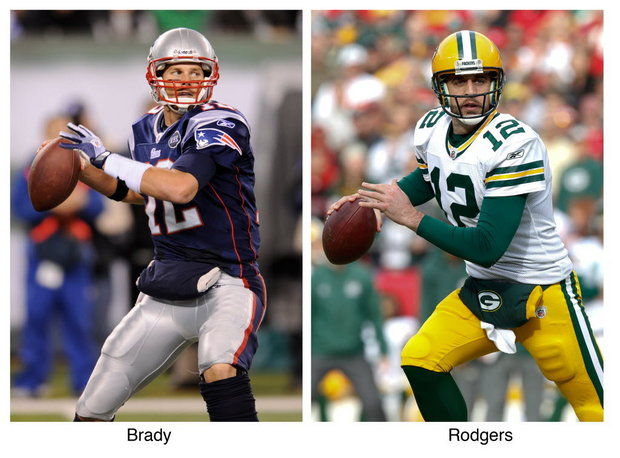
    It’s that time in his career where his physical strength and ability of a young man intersects with enough years of experience and wisdom to master the game. It’s when quarterbacks can play at the highest level and influence their teams to victory. Think Brady or Rodgers.

    brady vs rodgers

    The sweet spot.  The harvest. That comes in time after much toil.

    You get there after a lot of very hard work.  There’s a word in greek that Paul uses to express this- κοπιάω. Transliteration: kopiaó Phonetic Spelling: (kop-ee-ah’-o). 
    Definition:
     I toil, work with effort (of bodily and mental labor alike).
    I remember this word by telling myself to “Cope-EE-owl- CopE (like an) owl.”

    great_horned_owl_by_bioworkz-d7eh8pz

    Kopiaó is the idea that you break a sweat. You’ve worked until it drips and your body and mind have exerted at maximum intensity toward a purpose. It’s that effort in the pursuit of results that produces success. It’s your plan added to consistent effort measured by integrity that produces excellence. It’s knowing you’re weak, and your weaknesses, and your spiritual poverty and your lack of discipline, tendency to wander, chief temptations, and feeling the weariness that comes from the constant toil, and still believing by faith that God with work in you and through you as you trust in Him because He has called you and will equip you and you can do all things through Christ who gives you strength. 
    To this end I strenuously contend with all the energy Christ so powerfully works in me. Col 1:29

    The sweet spot is what R. Kent Hughes writes about in the preface of his ‘Preaching The Word‘ commentaries, ‘A Word to Those Who Preach the Word.’ Every year I would read this essay before I began to teach the BSF study and I would often return to it when the Kopiaó had me weary from exertion. I found great encouragement, wisdom and peace in the charge of R. Kent Hughes words so I share this treasure with those who CopE (like an) owl.

    Hughes writes, “There are times when I am preaching that I have especially sensed the pleasure of God. I usually become aware of it through the unnatural silence… through which my words sail like arrows. I experience a heightened eloquence, so that the cadence and volume of my voice intensify the truth I am preaching. There is nothing quite like it-the Holy Spirit filling one’s sails, the sense of His pleasure, and the awareness that something is happening among one’s hearers.
    What has happened? How do we account for this sense of God’s smile?
    The answer has come from the ancient rhetorical categories of logos, ethos and pathos.

    Logos– God’s Word. We stand before God’s people to proclaim His Word because we have done our homework. (Kopiaó) We have exegeted the passage, mined the significance of its words in their context & applied sound hermeneutical principles in interpreting the text so that we understand what its words meant to its hearers. We have labored long until we can express in a sentence what the theme of the text is & our outline springs from the text. Then, our preparations will be such that as we preach, we will not be preaching our own thoughts about God’s Word but God’s actual Word, His logos. This is fundamental in pleasing Him.

    Ethos-what you are as a person. There is a danger endemic to preaching, which is having your hands and heart cauterized by holy things. Phillip Brooks illustrates it by the analogy of a train conductor who comes to believe that he has been to the places he announces because of his long and loud heralding of them. And that is why Brooks insisted that preaching must be “bringing of truth through personality.” Though we can never perfectly embody the truth we preach, we must be subject to it, long for it, and make it as much a part of our ethos (what we are as a person) as possible. As the puritan William Ames said, “Next to the Scriptures, nothing makes a sermon more to pierce, than when it comes out of the inward affection of the heart without any affectation (design to impress).”
    When a preachers ethos backs up his logos, there will be the pleasure of God.

    Pathos-personal passion and conviction. David Hume, the Scottish philosopher and skeptic was once challenged as he was seen going to hear George Whitefield preach, “I thought you do not believe in the gospel.” Hume replied, “I don’t, but he does.” Just so! When a preacher believes what he preaches, there will be passion. And this belief and requisite passion will know the smile of God.

    The pleasure of God is a matter of logos (the Word), ethos (what you are), and pathos (your passion). As you preach (or teach) the Word may you experience His smile- the Holy Spirit in your sails!” R. Kent Hughes

    As the BSF (Bible Study Fellowship) year begins and many dear friends begin again to kopiaó as they teach, lead and attend classes all over the world in The Revelation study, I pray that you may be blessed abundantly as you strenuously contend with all the energy Christ so powerfully works in you to find the sweet spot and feel God’s smile.
    To God be the Glory! JLK

    I have become its servant by the commission God gave me to present to you the word of God in its fullness— the mystery that has been kept hidden for ages and generations, but is now disclosed to the Lord’s people. To them God has chosen to make known among the Gentiles the glorious riches of this mystery, which is Christ in you, the hope of glory. He is the one we proclaim, admonishing and teaching everyone with all wisdom, so that we may present everyone fully mature in Christ. To this end I strenuously contend with all the energy Christ so powerfully works in me. Colossians 1: 25-29

  • Prepare. Day 42 of Lent. Just as I am.

    Prepare. Day 42 of Lent. Just as I am.

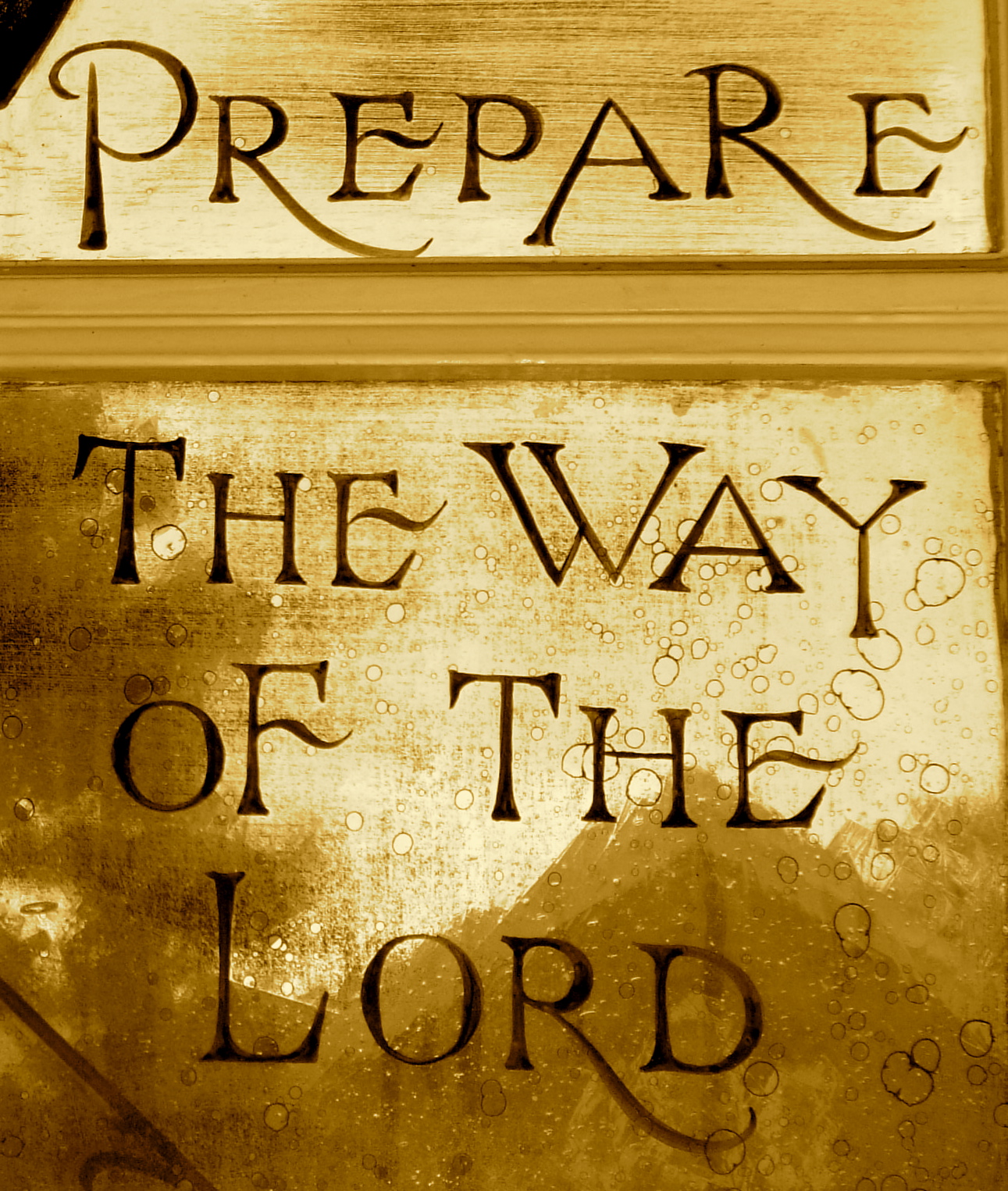
    prepare the way of the Lord

    A People Prepared for the Lord- A Sermon,
    Delivered By C. H. SPURGEON,
    At the Metropolitan Tabernacle, Newington
    On Lord’s-day Evening, March 13th, 1887.

    “To make ready a people prepared for the Lord.”—Luke 1:17.

    John was the herald of Christ; he was to prepare the way for the coming King, but from this text it appears that he was to do more than that. He was not only to make the road ready for the Lord, but he was also “to make ready a people prepared for the Lord.”
    That was a great work, a task in which he would require strength and wisdom greater than his own. He would need that the Spirit of God, who was to be given without measure to the coming One, should also be in a measure within himself, if he should really “make ready a people prepared for the Lord.”
    This is not at all a usual expression; at first sight, it hardly looks to us like a gospel expression.

    We sang just now,—
    “Just as I am—
    and waiting not To rid my soul of one dark blot,
    To thee, whose blood can cleanse each spot,
    O Lamb of God, I come.”

    We sang over and over again those words, “Just as I am, Just as I am,” and we are prone to protest against the idea of being prepared for Christ; we preach constantly that no preparation is needed, but that men are to come to Jesus just as they are.
    Yet here is John the Baptist set apart “to make ready a people prepared for the Lord.”
    The fact is, dear friends, that to get men to come to Jesus just as they are, is not an easy thing.

    To get them to give up the idea of preparing, to get them prepared to come without preparing, to get them ready to come just as they are, this is the hardest part of our work, this is our greatest difficulty.
    If we came and preached to men the necessity of preparation through so many weeks of fasting during a long Lent, or through so many days of scourging and penitence, they would attend to us at once, for they would be willing enough to make any preparation of that kind; but, when we say to them, “Come just as you are now, with nothing in your hand to buy the mercy of God, with nothing wherewith to demand or to deserve it,” men want a great deal of preparing before they will come to that point.

    Only the grace of God, working mightily through the Word, by the Spirit, will prepare men to come to Christ thus, prepared by being unprepared so far as any fitness of their own is concerned. The only fit state in which they can come is that of sinking themselves, abandoning all idea of helping Christ, and coming in all their natural impotence and guilt, and taking Christ to be their all in all.

    Beloved friends, this is the true preparedness of heart for coming to Christ, the preparedness of coming to him just as you are; and it was John’s business thus “to make ready a people prepared for the Lord.” That is also my business at this time. May the good Spirit, who dwelt in John the Baptist, work through us also, that some here may be made ready for Christ, “a people prepared for the Lord”!

  • Ask. Day 41 of Lent. Thanks for Asking.

    Ask. Day 41 of Lent. Thanks for Asking.

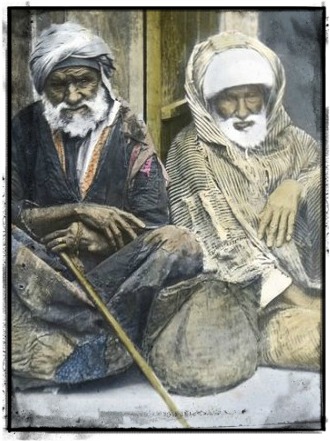
    2 blind beggars

    As they were leaving Jericho, a large crowd followed Him. And two blind men sitting by the road, hearing that Jesus was passing by, cried out, “Lord, have mercy on us, Son of David!” The crowd sternly told them to be quiet, but they cried out all the more, “Lord, Son of David, have mercy on us!” And Jesus stopped and called them, and said, “What do you want Me to do for you?” They said to Him, “Lord, we want our eyes to be opened.” Moved with compassion, Jesus touched their eyes; and immediately they regained their sight and followed Him.

    Matthew 20:29-34 is a layered story.
    One that arrests you if you let it.

    First of all, it’s about beggars – the pure ragamuffins among us, the poor in spirit and the actually poor of people, who are in need. Spiritually we need to never forget that is the blessed state we should migrate our minds back to as we seek to live humbly.
    So we find two blind beggars, they’re sitting by the side of the road, and they find out that Jesus is coming their way, so they began shouting.

    This is where it gets uncomfortable for a crowd. Especially a churchy kind of crowd who either are very concerned about not missing a word that Jesus would say or other churchy folks who just don’t like things out of the box and people misbehaving.
    Well these two guys are yelling at the top of their lungs, trying to get noticed. This is what desperate people do. People who are at rock bottom and see a way out, they break the rules of society, they go anti-social and anti-politically correct and they don’t even know it and least of all care about it, because, ‘Hello!’ they are desperate.

    Most of us self-sufficient strivers would be embarrassed by this display of neediness, and if we had kids with us, we’d pull them close and cover their curious eyes, if we were with friends we’d give each other the look as they shouted, “Lord, Son of David, have mercy on us.”

    I was thinking, wouldn’t it be cool if someone in the crowd got it. If instead of shhhh-ing them they said, “Hey, come with me. This Jesus he can heal you and I’ll get you to him. Take me hand.”
    But this crowd tried to shut them up and push them out. It’s uncomfortable to have desperate people screaming for help. It’s uncomfortable to have people with such obvious needs, being so obviously needy. And maybe this crowd had seen these guys for years and they’d given and given until they were annoyed. Who knows. But these desperate beggars, they got rowdy and shouted louder. I like these two ragamuffins. They know they have a need, a great need and a once in a life time opportunity.

    And then we read two awesome words: Jesus stopped.

    Then Jesus stopped and asked them a dangerous question. It was only the second time he’d ask this question. Earlier he’d ask James and John the same thing, when they were scheming and dreaming and fixated on being great and sitting to the left and the right of Him. (Mark 10:36) It shows me there is always an endless amount of layers in the Scripture, overlapping subtexts, from past to present, linking A to B and this person to that person, and one lesson to another. I’m sure this question re-asked, got James and John’s attention because it cuts to the very heart of the matter.

    “What do you want Me to do for you?”

    Do you ever get that one? The bold request to put your finger on it, exactly, what it is you want Jesus to do for you. To name it specifically. It’s a crazy intense kind of heart probing question. But these two guys knew exactly what they wanted, and it wasn’t all that spiritual. “Lord,” they said, “We want to see.”

    Jesus felt compassion for them, touched their eyes, and suddenly they could see. They were delivered, “Made Well” and received their sight. Then they ‘followed him‘.

    What exactly do you need from Jesus today?

    Sometimes it makes my heart pound when I imagine Jesus asking me, “What do you want me to do for you?”

    I think the question cuts through all the motives and the spiritual grandeur. It takes the wide and makes it impossible to fit into the narrowness of the request. It wants us to name it specifically, with honesty and authentically what we need.
    And thinking it through I find I’m just as needy as these ragamuffin blind beggars and what I really need isn’t something Jesus wants me to whisper quietly to Him now. He wants me to be blessed and to have His divine favor rest upon me, so this poor in spirit Christian needs to open her hands and beg.

    What?
    I can hear it. I really just heard you say it or think it. Beg?

    Yes.  Beg. It’s the spiritual word for people who realize their spiritual poverty. It’s the mature way the sanctified ‘Ask’. We get in the humble posture, we agree we can’t do this or get this need met on our own. We lift our empty uncapable hands out and up to God. And we beg, out loud, in fact loudly in this case would be from a pounding heart of a body that is suddenly urgent to express a need, a great need, feeling like this is a once in a life time opportunity to get that need met because we heard Jesus ask us the question, “What is it you want me to do?”

    We need to get more comfortable with being uncomfortable with the fact that we need help.

    Everybody is desperate to know that Jesus still stops for them.
    Everybody is desperate and needy, especially the ones who look like they aren’t. Everybody has a need that Jesus wants us to express specifically.

    Jesus ASKS “What is it you want me to do?”

    Lord, we are the crowd who sometimes get in the way of the needy. We hush people up. Shame on us. Help us to love the ragamuffins, to be more comfortable with the uncomfortable, to lead people to you, not shut people down and keep them out.

    We are also the beggar, poor in spirit, and how blessed to know that you stop, Jesus, you see us and Ask us what we need. Lord let us speak out loud our need. Let us shout it once we realize, let us beg you for it. And let us not forget the answer came with your infamous ‘follow me’.

    Thanks so much for stopping to ask us, Jesus.

  • Devotion. Day 33 of Lent. How we finish The Story.

    Devotion. Day 33 of Lent. How we finish The Story.

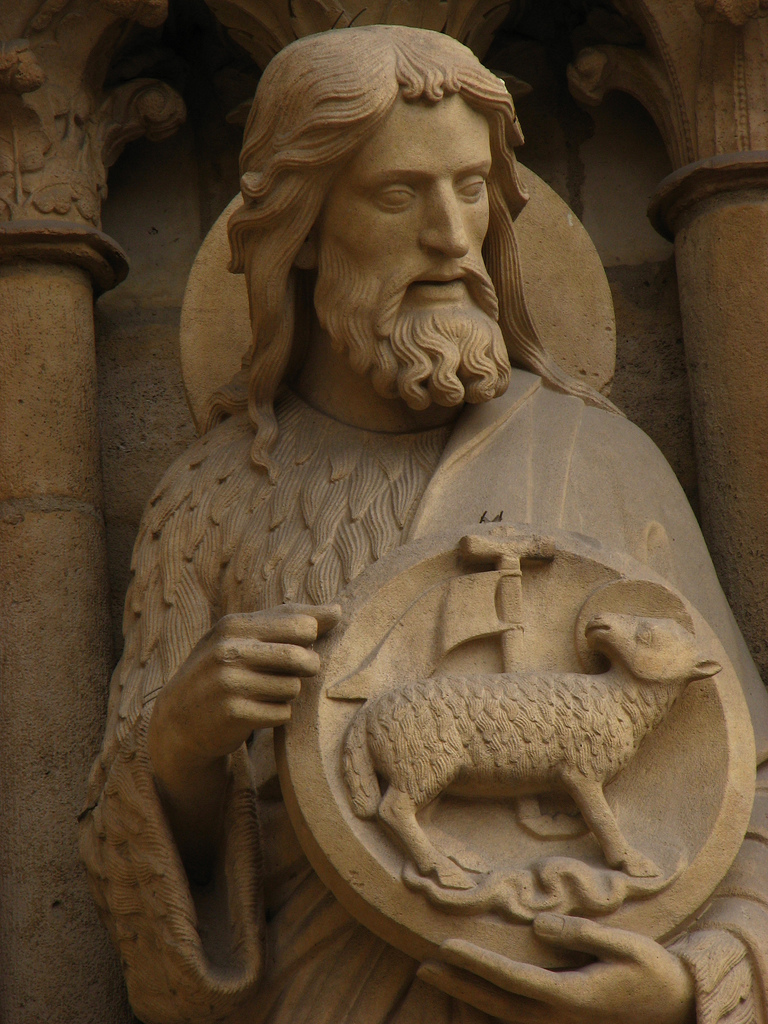
    we behold the lamb

    They triumphed over him by the blood of the Lamb and by the word of their testimony; they did not love their lives so much as to shrink from death.” Rev 12:11

    From Day 31 of Lent there was The Story of the Moravian Missionaries and their rallying call of “May the Lamb that was slain receive the reward of his suffering!” On Day 32 of Lent The Story continued with Nicolaus Ludwig von Zinzendorf’s call to Serve after he read the words, “I have done this for you; what have you done for me?” On Day 33 we finish the story with Devotion, after realizing Christ died for us and we, the Church are the reward of His suffering.

    Acts 20:28 says that God purchased the church with Christ’s blood. “Take heed to yourselves and to all the flock, in which the Holy Spirit has made you overseers, to care for the church of God which he obtained with the blood of his own Son.” On the authority of this text we can say: Christ’s bleeding wounds were meant to purchase me. The Savior’s drops of blood were shed to obtain my redemption.”

    Understanding that the Church of God is the reward of Christ’s suffering we realize we are not our own. We have been bought with a price. Redeemed from the wrath of God and the destination of eternal hell and given eternal life.

    We are Christ’s reward and this truth moves our heart with devotion-an ardent, often selfless affection and dedication to Him.

    Christ suffered to cleanse and beautify His people, His bride.  “Husbands, love your wives as Christ loved the church and gave himself up for her, that he might sanctify her, having cleansed her by the washing of water with the word, that he might present the church to himself in splendor, without spot or wrinkle or any such thing, that she might be holy and without blemish.” Ephesians 5:25–27

    What was the reward of His suffering? To sanctify His church that the holiness-spiritual beauty-of his people will be His reward. To present her to Himself in splendor; without spot or wrinkle, so His reward will be the beauty of His bride. The Church, Christ Bride, will be splendid and glorious at the marriage feast of the Lamb.

    When ask what the most important commanded was, Jesus answered, “Love the Lord your God with all your heart and with all your soul and with all your strength and with all your mind.’ Are you loving Christ with all your might to render to Jesus the reward of his suffering—to offer up to him what He has purchased? Is your heart in tune with his heart, understanding what Christ suffered for, not that you would be blessed with health and wealth and live in a comfort zone of happiness-all outward things, but that you might be holy, spiritually beautiful, set apart for Him, becoming more and more like Him daily. He considered your holiness worth dying for; are you considering His love worth living for or do you neglect what he died to purchase?

    So the reward of Christ’s sufferings is the holiness of his people. He suffered and bled and died to obtain a people and to make that people holy—clean and beautiful. Your holiness—your spiritual beauty—is the reward of his sufferings and the purchase of his blood.

    This spiritually beautiful bride of Christ will be passionate for Good Deeds. “He offered himself as a sacrifice to free us from a dark, rebellious life into this good, pure life, making us a people he can be proud of, energetic in goodness.” Titus 2:11-14 (MSG) Or as the NIV translates, “He gave himself for us to redeem us from all iniquity and to purify for himself a people of his own who are zealous for good deeds.

    He gave himself to make a people zealous for good deeds. He shed his blood to purchase your passion for practical righteousness, for showing mercy, for benevolence and goodness and kindness, for courage and compassion.  Notice this carefully: he did not die merely to get you to start trying harder, to stop doing some bad things or get you to do some good things. He died to change something in our spirit, to fan into flame a fire in us to serve, passionately.

    Teacher, which is the great commandment in the Law?” And Jesus said to him, “ ‘YOU SHALL LOVE THE LORD YOUR GOD WITH ALL YOUR HEART, AND WITH ALL YOUR SOUL, AND WITH ALL YOUR MIND.’ “This is the great and foremost commandment. “The second is like it, ‘YOU SHALL LOVE YOUR NEIGHBOR AS YOURSELF.’ “On these two commandments depend the whole Law and the Prophets.”

    Christ suffered and bled and died to give you, the people who love Him, a zeal for doing good.  Do you have a passion for doing good to people? The eternal good through being a witness of the good news of the gospel and a temporal good of serving others as a means to that end, that they too may be saved. How are you loving your ‘neighbors’? Are you denying Christ the reward of his sufferings by only serving yourself?

    The passion of those early Moravian missionaries was zealous and peculiar. Zinzendorf made sure that they never forgot the blood of Jesus. They understood: my life, my holiness-spiritual beauty, my passionate love for others shown in service was purchased at the price of his blood. How can I not live for his honor with every breath I take! How can I not freely offer up to him what he has purchased with his blood and give Him wholehearted service?

    Finally, the reward of Christ’s sufferings is a ransomed church from every tribe and tongue and people and nation. In Revelation 5:9 the Lamb of God is worshiped with these words, “You are worthy to take the scroll and to open its seals, because you were slain,     and with your blood you purchased for God persons from every tribe and language and people and nation.”

    We are the reward of Christ suffering, the redeemed of every tribe, tongue, people and nation, made spiritually beautiful and zealous for good works. The reward of His suffering is also the forgiveness of our sins (Ephesians 1:7), and justification by faith (Romans 5:9), and reconciliation with God (Romans 5:10), and cleansing of our consciences (Hebrews 9:14), and the final victory over Satan (Revelation 12:11).

    When I first heard this story of the Moravian missionaries, I found in comparison my own heart had a terrible indifference to the price Jesus paid for my holiness and my zeal for service and my passion for world evangelism. Yet their inspirational parting cry to family and friends can becoming our meditative prayer of devotion; making a difference now in how we live for Him. “MAY THE LAMB THAT WAS SLAIN RECEIVE THE REWARD OF HIS SUFFERING.”

    Lord Jesus, as your reward, may there be nothing we want more in life than what You suffered, bled and died to obtain. Let us love You with all our might to render to You with passion the reward of Your suffering; an inner holiness of a beautiful spirit, a zeal for service, a passion for witnessing to our world the good news of the gospel to the praise of Your glory. Amen


  • DREAM. Day 14 of LENT. I dreamed a dream.

    DREAM. Day 14 of LENT. I dreamed a dream.


    DREAM. My first thought about this word was a song- I Dreamed a Dream from Les Miserables but not the way Anne Hathaway sang it. I thought of that infamous episode of Britains Got Talent, did you see it? If you have time watch below; if not I’ll tell you about it. This “nearly 48” year old woman, Susan Boyle steps out like a wiry-haired church lady in a vanilla colored frock and is presented to Simon and staff.  Susan said she’d always dreamed of being a professional singer but no one had given her a chance.  No one in the audience was giving her a chance either until she began to sing.  In moments she had the nay-sayers on their feet with a standing ovation even as she still singed.  And truthfully, the video account is so shocking and awe inspiring to me it is the best account of what dreams are all about when they suddenly come true. Unbelieveable!

    We all dream in the ordinary way. Unless you pulled an all-nighter, you had one last night. Do you remember the Technicolor series of images, ideas, sensations and emotions which told that involuntary story while you slept? Dreams occur when one first enters into what is called Rapid Eye Movement (REM), the deepest sleep time. The average person sleeping for eight hours a night can dream up to one to two hours of that time.  Once you get the brain down to the minimum possible activity . . . your mind is free. In the dream state the mind is more impressionable to the day’s events and often plays back composites of what was said, thought or done. It replays events and puts together bits and pieces that can make sense or not make any sense. Fragmentary ideas or loosely connected circumstances and thoughts make up dreams and it can be totally subjective sorting out its meaning with varied interpretations.

    Biblically speaking we know God used dreams. God planted the DREAM of leadership that was longed for by Joseph and jealously ridiculed by his brothers as an unrealistic and foolish hope-“us, bow down to you, not.” Solomon was given the promise of wisdom in a dream and Gideon was encouraged to victory through the interpretation of a dream. Jacob dreamed of the stairway to heaven and Joseph was given the blessing to marry Mary and step-father Jesus and the warning to escape Herod and flee to Egypt all while asleep and dreaming.  The visions and dreams recorded in the Bible were given to specific people for a specific purpose- God’s purpose.

    Just because one receives a dream or vision does not mean it is from God. Satan can give dreams and visions. He did so with Jesus “Then the devil, taking Him up on a high mountain, showed Him all the kingdoms of the world in a moment of time” (Luke 4:5). This was something seen-a vision by his supernatural power to tempt Jesus to sin but Jesus resisted.  We have to test the spirits to discern their intent-is it for good or evil? Solomon reminds us, “For in the multitude of dreams and many words there is also vanity. But fear God.” Eccl 5:7

    Dreams are different than visions.
    A dream is a story communicated in picture that takes place when you are asleep.
    A vision is when you are awake and see reality part and are either watching or end up participating in it as John did in the book of Revelation or Isaiah did in the throne room of the most high God. God formerly used a variety of means to communicate with man, which would include dreams or visions. Scripture more often tells us the word came to the prophets- in other words they had an encounter with the word, the Son of God. But in our day, His revelation is not normally through these means but through the Lord Jesus Christ whose revelation is final and superior and revealed in the Word the Bible.

    Yet Luke records, “‘In the last days, God says, I will pour out my Spirit on all people. Your sons and daughters will prophesy, your young men will see visions, your old men will dream dreams.” Acts 2:17

    Putting the two definitions of DREAM together- what if you had to exist in a culture of oppression and fear.  What if you always dreamed of a life where you were free and loved and fulfilled and alive.  And what would you do if suddenly Jesus began to appear in your dreams? There His presence brought peace and love, ALIVENESS and FULLNESS like nothing you had ever experienced.  With Jesus you felt absolutely safe for the very first time, valued and perfectly loved in the dream. What if He came to you with the same single message? And what if that same dream continued for over thirty days? Thirty weeks? Thirty years? What if on the thirty-first time he told you that tomorrow you would meet His friend and you were to ask His friend to tell you all about Him? And what if it happened? The friend of Jesus was there, at that place you went to every day, they were dressed just like they were in the dream and when you approached them and ask if they were Jesus’ friend, they said, “yes,” and they told you all about their friend and savior from the Bible.

    What if I told you this story is true?

    It is about a Muslim woman. And she wasn’t the only Muslim experiencing this dream. A staggering number of Muslims are being introduced to Jesus through a vision or dream so powerful that they eventually turned from their lifelong religion of Islam and embrace Christ as their Savior.  These conversions are despite living in a culture where converting to Christianity can result in execution. Jesus is reaching out to the Muslims and they are responding. Did you know that Iran has the fastest growing church in the world?

    Tom Doyle has spent the last 11 years working as a missionary in the Middle East. He was initially skeptical about reports that God was speaking to Muslims in supernatural ways. But his mindset changed when his friend told him: “God showed me that my theology does not determine His action.” Doyle says these dreams are opening the door for Muslims to hear the testimony about Jesus from Christians in countries where spreading the Gospel is forbidden. While the West associates Islam with terrorism, Doyle believes the majority of Muslims are peace-loving. “I believe Islamic terrorism is Satan’s attempt to keep the Gospel message away from Muslims,” he writes. Nothing can stop the Gospel from spreading.  “More Muslims are coming to faith in Jesus today than ever before. In fact, we believe more Muslims have become followers of Jesus in the last ten years than in the last 14 centuries of Islam.”

    Unbelievable! I had no idea this was happening, did you? We should pray for the peace of Jerusalem and for the bold witness to, and courageous conversion of Muslims. You can read more about it in Tom Doyle’s book:

    DREAMS AND VISIONS: Is Jesus Awakening the Muslim World?

    And watch for the dreams to convert one of my characters in the FURY series Book Three Effect this fall. DREAM ON!

  • GO. Day 13 of Lent. Wisdom from Dr. Seuss.

    GO. Day 12 of Lent. Wisdom from Dr. Seuss.

    oh the places you'll go

    Remember what Dr. Seuss taught us all in Oh, The Places You’ll Go!

    The story begins with the decision of the unnamed protagonist to leave town and take a journey. The protagonist travels through several geometrical and polychromatic landscapes and places, eventually encountering  “The Waiting Place”.

    ..for people just waiting. Waiting for a train to go or a bus to come, or a plane to go or the mail to come, or the rain to go or the phone to ring, or the snow to snow or waiting around for a Yes or a No or waiting for their hair to grow. Everyone is just waiting.Waiting for the fish to bite or waiting for wind to fly a kite  or waiting around for Friday night or waiting, perhaps, for their Uncle Jake or a pot to boil, or a Better Break or a sting of pearls, or a pair of pants or a wig with curls, or Another Chance.  Everyone is just waiting.

    This last book by Dr. Seuss was written in 1990. And I wonder if today the phraseology wouldn’t have been, “The busy place” for people just busy. Busy on cellphones or tablets or laptops, we’re all busy tweeting or skyping or instagraming, watching our Netflix and following blogs, drinking our StarBucks and GPSing in cars, busy going here and taking us there, glorifying busy, busy everywhere.

    Busy is never an excuse for procrastinating and not “going” where God calls us. Good things are often the enemy of God’s best and waiting always serves a purpose in our journey.  It produces anticipation and provides time for planning.  No one naturally wants to wait so the task requires sacrificing our selfish desires and placing our trust in God’s timing. Waiting can be a protection and waiting patiently indicates maturity.

    The lessons I always come away with in this story are:

    You have to start to finish – “You’re off to Great Places! Today is your day! Your mountain is waiting, So… get on your way!”

    God provides what you need– “You have brains in your head. You have feet in your shoes. You can steer yourself any direction you choose. You’re on your own. And you know what you know. And YOU are the one who’ll decide where to go…”

    Stay balanced to succeed “So be sure when you step, Step with care and great tact. And remember that life’s A Great Balancing Act.

    Persevere through fear -“All Alone!  Whether you like it or not,  Alone will be something  you’ll be quite a lot. And when you’re alone, there’s a very good chance  you’ll meet things that scare you right out of your pants. There are some, down the road between hither and yon, that can scare you so much you won’t want to go on.”

    Gratitude lifts the spirit-“When you’re in a Slump, you’re not in for much fun. Un-slumping yourself is not easily done.”

    Waiting is the mean time of faith-“You can get so confused that you’ll start in to race down long wiggled roads at a break-necking pace and grind on for miles across weirdish wild space,
    headed, I fear, toward a most useless place.
    The Waiting Place…”


    Get your copy of Dr. Seuss’ Oh, The Places You’ll Go!

  • Kingdom. 7th day of Lent. The Kingdom of God is like…

    Kingdom. 7th day of Lent. The Kingdom of God is like…

    kingdom_of_god #lent #lentphotoaday


    We often come from the perspective that life started with us-
    our story is our frame of reference.
    We know the family tree, maybe back three generations, and we’ve been schooled with world history to know antiquity but our existence is perceived through our own history.
    Our story. Our story world. Once upon a time, I was born and lived like this. It’s what I know, it’s from where I see and hear and experience life.  It’s my perspective.

    And the word KINGDOM today reminds me that too often my perspective is incomplete, faulty and at times wrong.
    The KINGDOM is God’s perspective on life.

    The Kingdom of God is the experience of blessedness, like that of the Garden of Eden, where evil is fully overcome & where those who live in the kingdom know the eternal ALIVENESS and undefinable FULLNESS of God that is exemplified in his vast attributes like love, power, peace, joy, and righteousness.

    The KINGDOM is the message Christ proclaimed.
    There were two bookends of his good news message.
    He would start his teaching this way, “The Kingdom of Heaven is like…”
    And he would end it like this “If you have eyes to see then see and ears to hear then hear.”
    He warns us at the end, don’t miss what I just said to you.
    You might hear and not hear. See and not see.
    Huh?  That’s right. All of our faces housed the big question mark.

    For years that’s what ‘The Kingdom of God’ did to me too. I would listen. Hard. I would hear. But I couldn’t get it. What this kingdom was about. Had it come with Jesus? Was it coming back? Where was it? How did I reach out my hand and touch it?

    In Matthew 3, John the Baptist proclaims, “Repent, for the kingdom of God is at hand.” Repent. Is that how we get the Kingdom ‘in hand’? John was calling out the religious and today some of the religious need to be called out to bring forward the fruit of repentance too. For the religious, self-effort people we hear in these words, “Straighten up, God is coming and when He gets here he is going to be really ticked.”  It’s like when mother used to say, “Straighten up and wait till your father gets home.” We totally understood ‘the hand’ that was about to reach out and touch us of discipline because of our crooked living that went on while he was away.

    But wait. I remember this truth… “God didn’t go to all the trouble of sending his Son merely to point an accusing finger, telling the world how bad it was. He came to help, to put the world right again. Anyone who trusts in him is acquitted; anyone who refuses to trust him has long since been under the death sentence without knowing it. And why? Because of that person’s failure to believe in the one-of-a-kind Son of God when introduced to him.” John 3:17

    It’s like we see things up-side-down. 

    So if Christ came to help, to put the world right again, I have to go back to my definition, the Kingdom of God is the experience of blessedness, like that of the Garden of Eden, where evil is fully overcome & where those who live in the kingdom know the eternal ALIVENESS and undefinable FULLNESS of God that is exemplified in his vast attributes like love, power, peace, joy, and righteousness.

    Suddenly my definition of ‘repent’ isn’t working besides my definition of Kingdom. Again, I’ve made Repent about behavior that occurs when I change the CONTENT of my mind, and switch the direction of my behavior. Instead I need to redefine Repent to be about my spirit.  Renewing my mind I think differently about how I’m seeing things. Think differently afterwards because “the Kingdom of God is at hand.”

    Keep reading on in Matthew and chapter 4 we read, “From that time on Jesus began to preach, “Repent, for the kingdom of heaven has come near.”

    John the Baptist grew up in a corrupt religious system and the forerunner was warning us to prepare ourselves. To get ourselves ready. The Kingdom of heaven is at hand, has come near.
    Jesus has come near. Jesus the ever existing one didn’t grow up in a corrupt religious system. The King of this Kingdom is I AM.

    I AM has a Kingdom perspective.
    I AM is the eternal ALIVENESS and undefinable FULLNESS of God exemplified in his vast attributes like love, power, peace, joy and righteousness.
    I AM has come near.  And in Him was LIFE.
    “Aliveness” was near.
    Aliveness, filling the atmosphere of the kingdom of God.

    BEFORE creation- there was a Kingdom- filled with everything that makes things work. Imagine power and love and peace, joy and righteousness were the atmosphere soaking this place.

    Jesus wants to tell us about this so he starts teaching this way-
    The Kingdom of heaven is like…
    Not telling us how to do earth- telling us about a reality that exist spiritually-  of aliveness- the atmosphere the fullness of God.

    This Kingdom is upside-down. It’s contrary to what we think we know most of the time and totally contradictory to what the world would have us believe.  We have to have the Spirit to help us perceive it properly to know Christ is at hand. He is near to us. Not pointing a judging finger but offering his hand. And what does he want? Right behavior?

    Oh, please get this.
    He wants a relationship. With you.

    Spirit speaking to spirit. Aliveness. Fullness. At hand. Near. Yes.
    The Kingdom of God is the experience of blessedness, like that of the Garden of Eden, where evil is fully overcome & where those who live in the kingdom know the eternal ALIVENESS and undefinable FULLNESS of God that is exemplified in his vast attributes like love, power, peace, joy, and righteousness.