Debit is a bookkeeping term for the recording or an entry of debt in an account.
To understand its spiritual significance we first have to understand sin’s definition.
Sin is anything that is contrary to the law or will of God. If you do what God has forbidden, then you have sinned. If you do not do what God has commanded, you sin (James 4:17). Either way, the result is eternal separation from God (Isaiah 59:2). Sin is lawlessness (1 John 1:3) and unrighteousness (1 John 5:17). Sin leads to bondage (Rom. 6:14-20) and death (Rom. 6:23). Everyone who sins is breaking God’s law, for all sin is contrary to the law of God. 1 John 3:4
Sin is breaking the law of God.
Sin, breaking the law of God, is a legal debt.
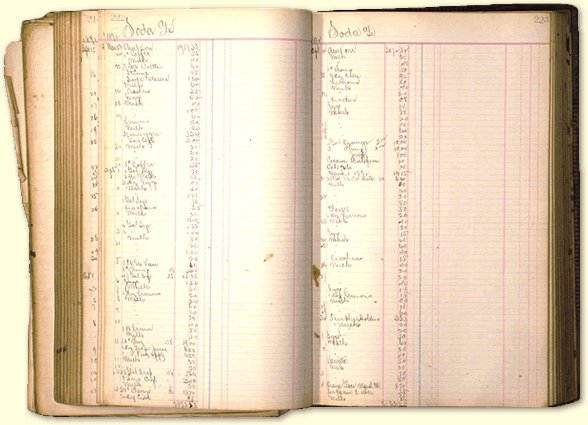
In Luke 11:4 it says, “And forgive us our sins (hamartia) . . . ” Jesus equates sin with debt. We can think of it as each sin is a debt recorded as an entry in a ledger. At some point that debt will come due for payment.
Legal debts can be transferred.
Sin is a legal debt and because legal debts can be transferred that is why Jesus could bear our sins in His body on the cross (1 Peter 2:24). Through faith we believe this and are justified.
Justified is a legal standing before the Law.
To be justified is to be declared legally righteous. It is a divine act where God declares the sinner to be innocent of his sins. It is not that the sinner is now sinless but that he is “declared” sinless legally. This justification is based on the shed blood of Jesus, ” . . . having now been justified by His blood . . . ” (Rom. 5:9). When God sees the Christian, He sees him through the sacrifice of Jesus and “sees” him without sin. This declaration of innocence is not without cost, for it required the satisfaction of God’s Law, ” . . . without shedding of blood there is no forgiveness,” (Heb. 9:22). In justification, the justice of God fell upon Himself—Jesus, the Son of God. Justification is a legal act of imputing the righteousness of Christ to the believer (Rom. 4:11; Phil. 3:9).
To impute means to reckon to someone the blessing, curse, debt, etc., of another.
Adam’s sin is imputed to all people (Rom. 5:12-21). Therefore, we are effectively all guilty before God. Our sins were put upon, imputed, to Jesus on the cross. He became sin on our behalf (2 Cor. 5:21) and died with them (Isaiah 53:4-6). Our sins were dead and buried with Jesus Christ in the tomb. Therefore, our sins are forgiven. Understanding imputation is very important. Imputation is the means of our salvation. Our sins were put upon, imputed, to Jesus on the cross. Our sins, the legal debt we owed, were “given” to Jesus to pay for. When He died on the cross, our sins, in a sense, died with Him. The righteousness that was His through His perfect obedience to the Father in His complete obedience to the Law is imputed, given, to us and legally put in our account. In short, our sins were given to Jesus. His righteousness was given to us.
To sum it up:
Sin is breaking the law of God and is a legal debt.
Sin is a legal debt and because legal debts can be transferred that is why Jesus could bear our sins in His body on the cross.
Through faith we believe this and are justified.
To be justified is to be declared legally righteous.
Justification is a legal act of imputing the righteousness of Christ to the believer.
To impute means to reckon to someone the debt of another.
Our sins/legal debt were transferred to Jesus.
His righteousness was given to us.
Now that our debt is paid, “Let no debt remain outstanding, except the continuing debt to love one another, for whoever loves others has fulfilled the law.” Romans 13:8
He paid a debt He did not owe;
I owed a debt I could not pay;
I needed someone to wash my sins away. “Amazing Grace.”
Christ Jesus paid a debt that I could never pay.
Hymn by: Ellis J. Crum
FOLLOW. Day 35 of Lent. You, Me keep on following.
Jesus used a two-word phrase most often when engaging people.
It was a simple, yet profound, call issued with a tone of encouragement. Follow me.
Jesus used this call, follow me, at least 12x in the gospels.
When Jesus first saw Peter and Andrew his challenging call was “follow me and I’ll teach you how to fish for people.”
Jesus told his followers – take up your cross and – follow me.
He described his followers as sheep – who follow him.
He told us if anyone serves me, he must follow me.
He challenged Peter, after Peter had denied Jesus – follow me.
In New Testament times when a rabbi said “follow me,” he wasn’t simply saying get behind me and go where I go. It wasn’t a recruitment line like “Be all you can be, join the Army.” It was a much deeper appeal—a call— that told the one hearing it, I see something in you, I think you have a heart like mine, a soul like mine. We’re like minded. Join with me, watch me, listen to me, learn from me. I believe you can be like me.
The meaning of the words ‘follow me’ are a challenge to the called to be in the same way as their teacher.
When Jesus said ‘follow me’ it was both a challenge and an encouragement.
“As Jesus was walking along, he saw a man named Matthew sitting at his tax collector’s booth. ‘Follow me and be my disciple,’ Jesus said to him. So Matthew got up and followed him.”-Matthew 9:9 (NLT)
Jesus saw the heart, soul and mind of Matthew; a tax collector.
Back then tax collectors were master extortionist, real bad guys who were crooked and greedy and hated by the Jews because they had aligned themselves with Rome. So hated they had their very own category – tax collector’s, who were considered so evil that they weren’t even lumped in with “sinners”. Matthew was a Jew by name only, he had to renounce his Jewish heritage to become a tax collector. He could no longer go to the temple to make sacrifices. He would be considered a traitor. And considered far from God.
When Jesus called Matthew he called a tax collector hated by everyone. Do a quick study to see the story from another perspective. In Luke’s gospel it says Jesus “saw a tax collector,” the Jewish response would be resentment, and disgust. But notice how Matthew records it in the gospel version he wrote, “Jesus saw a man named Matthew.”
Matthew knew by personal experience that Jesus saw past the façade. He saw beyond the poor choices and bad decisions and greedy motivations. He saw beyond the family line of the inherited position and past the pride that was a shield to his outcast heart. Jesus saw the man.
“Here is one of the greatest instances in the New Testament of Jesus’ power to see in a man, not only what he was, but also what he could be. No one ever had such faith in the possibilities of human nature as Jesus had.” -William Barclay
As Matthew sat at the tax collector’s booth Jesus issued him an invitation, a way out of his former life to begin a new life. With the words ‘follow me’ he was lavishing encouragement-which means to impart strength into someone saying He believed there was something about Matthew that was like Him- you have a heart like mine, a soul like mine, we’re like minded- join with me, watch me, listen to me, learn from me. Be my disciple.
Matthew got up and followed Jesus!
He wanted out. He wanted freedom. He wanted community and union and love more than the emptiness of money and power. In that one moment can you imagine what Matthew experienced? Grace, amazing grace, full and deep and real. Love. Jesus saw him. His inner being understood. Jesus gave him another chance and a new life. Isn’t that the picture of salvation. Yes. Lord, yes, how you love us. Our God sees us.
Matthew experienced a spiritual truth that day … God sees us where we are and calls us to follow him into deeper things.
You might think about Matthew and be tempted to compare your story to his. Don’t.
In C.S. Lewis story, A Horse and His Boy, Aslan recounts his sovereign workings in Shasta’s life. As he listens and reflects he suddenly questions, “Then it was you who wounded Aravis?”
“It was I.”
“But what for?”
“Child, I am telling your story, not hers. I tell no one any story but his own.”
Comparison kills contentment and takes our focus off of the story God is writing in our lives. The apostle Peter learned this truth after he was reinstated through Christ’s three questions, “Peter, do you love me?” that counter balanced Peter’s three earlier betrayals as he answered, “Yes, Lord, I love you,” and was commissioned again to feed and shepherd Jesus people. Jesus then explains that Peter’s life of service would be difficult and he would have to bear his own cross, Peter looks at the apostle John and asks the comparison question- “Lord, what about him?”
Jesus answered, “If I want him to remain alive until I return, what is that to you? You must follow me.”
Jesus final ‘Follow me’ can be translated like this, “You, Me keep on following.”
You- your journey, your story is personal and Jesus knows it all.
Me- the Lord Jesus Christ is the one we are to follow.
Keep on- following is a never-ending pursuit.
Follow-like I walked, where I lead you, in my spirit, abiding in me for energy and sustenance.
After 2,000 years Jesus’ challenge hasn’t changed. It is simply…
You, Me keep on following.
Jesus isn’t inviting us to join a lecture group to get to know Him and His ways.
This is an apprenticeship. It’s hands on application we are called to by the words, “You, Me keep on following.”
The Jews had a blessing said over students of a rabbi –
“May you always be covered by the dust of your rabbi.”
A rabbi would often travel and following close behind would be his disciples. After walking the dusty roads directly behind their rabbi, the disciples would be dusted, covered by the road dirt that was kicked up from the rabbi’s feet.
“May you always be covered by the dust of The Rabbi, the Lord Jesus Christ.”
May you find the dust of your rabbi in his mysterious call within your heart and in his true Word spoken aloud. May dust find you in moments of quiet meditation and settle over you in those times of deep reflection. May his dust sparkle in the air as you worship, giving to those who have less, serving those in need, pouring out to others the good news of the gospel. May the same dust of The Rabbi so infiltrate your life that it begins to cover others behind you as you run the race set before you, your story in His story, of the grace and love of God.
Dr. Gregory House claims, “Everybody lies,” on the show House, but few understand what lying is, what it does, and how to stop it.
Lying is saying something with the intent of creating a false belief or impression. It’s an attempt to get someone to believe something that is not true. We deceive other people because we think it serves our purposes in some way.
We often lie when we are afraid of facing what would happen if we told the truth. We lie to cover-up. Or we lie to inflate who we are because we lack self-confidence and feel overlooked or want attention or status. We deceive other people because we think it serves our purposes in some way or it keeps us from hurting them because as Jack Nicholson’s said, “You can’t handle the truth.” We’re all habitual ‘white liars’ because we are too lazy to find creative ways to speak the truth in love and we can’t fathom how rude we would be if we all told the truth all the time like Jim Carrey in the 1997 comedy Liar Liar.
The most common ways we lie are to save face, shift the blame, avoid confrontation, to get our way, to be nice or to make ourselves look better. But every lie has a cost. Dr. Feldman says in his book The Liar in Your Life, “Even if we are telling what seems to be a totally harmless lie, we know we’re telling that lie, and it causes a kind of smudge on the relationship.” When we find out we’ve been lied to a certain trust has been broken, our faith is shattered and we find it harder to trust.
Trust. The firm belief in the integrity, ability, or character of a person or thing that gives us confidence or reliance in them. Trust makes something worth believing.
In a world where everybody lies how assuring is it that God himself “does not lie” (Titus 1:2). In his holiness, he is incapable of lying.
“God is light; in him there is no darkness at all” (1 John 1:5).
“God is not human, that he should lie, not a human being, that he should change his mind. Does he speak and then not act? Does he promise and not fulfill?” Numbers 23:19
God cannot lie. If it were ever righteous to lie, then that would mean there is something that God can not do. It is clearly not God’s plan for people to say something with the intent of creating a false belief or impression to get someone to believe something that is not true because we it serves our purposes in some way. As His children we are called to love our neighbor as ourselves and not bear false witness.
Some might make an argument for lying when it is the lesser of two evils like in the case of Corrie ten Boom, who saved a number of lives by hiding Jewish people from the Gestapo. Sarah Sumner says that, “Ten Boom’s situation—like many other situations—was so tangled up in sin that it seems like her best option was to lie. What ten Boom’s case shows is not that lying is honoring to God, but rather that human circumstances can degenerate into something so depraved that lies get mixed in with acts of faith.”
In a sinful world truth dilemmas are the exception not the rule. Corrie ten Boom was an honorable hero but when she lied, she wasn’t imitating God.
We can trust God because God never lies. God always tells the truth. Truth is that which corresponds to reality. God always speaks truth. If He says fire is hot, it is hot. His truth corresponds to reality.
Jesus said, “I am the way the truth and the life.” (John14:6) “In fact, the reason I was born and came into the world is to testify to the truth. Everyone on the side of truth listens to me.” (John 18:37)
Lying is sin because untruth violates Truth. Since Jesus is the Truth, it is antichrist or against Christ to lie. Without truth there would be only chaos. No community.
God is relational and He knows that lying breaks the trust in a relationship. It is a sin against our fellow-man, ourselves and our God. God wants us to be truthful as a way of cultivating our relationship not only with Him but also with other people.
Jesus is truth and cannot lie therefore God can be trusted.
But there is a father of lies named Satan. He is always saying things with the intent of creating a false belief or impression, attempting to get someone to believe something that is not true because it serves his purpose to deceive the world.Satan tries to tell us truth is relative and is based on ‘How you see reality.” Maybe fire isn’t hot it is only warm, you should touch it and see.
Truth is not relative, it is absolute. Everybody knows what truth is because everybody knows how to lie and tell what truth is not.
The issue with TRUST, isn’t an issue with having a God we can trust, it is more an issue with our own ability to trust because everyone else we know lies.
Today just meditate on the truth- My God can not lie.
For the king trusts in the LORD, And through the lovingkindness of the Most High he will not be shaken. Psalms 21:7
Devotion. Day 33 of Lent. How we finish The Story.
“They triumphed over him by the blood of the Lamb and by the word of their testimony; they did not love their lives so much as to shrink from death.” Rev 12:11
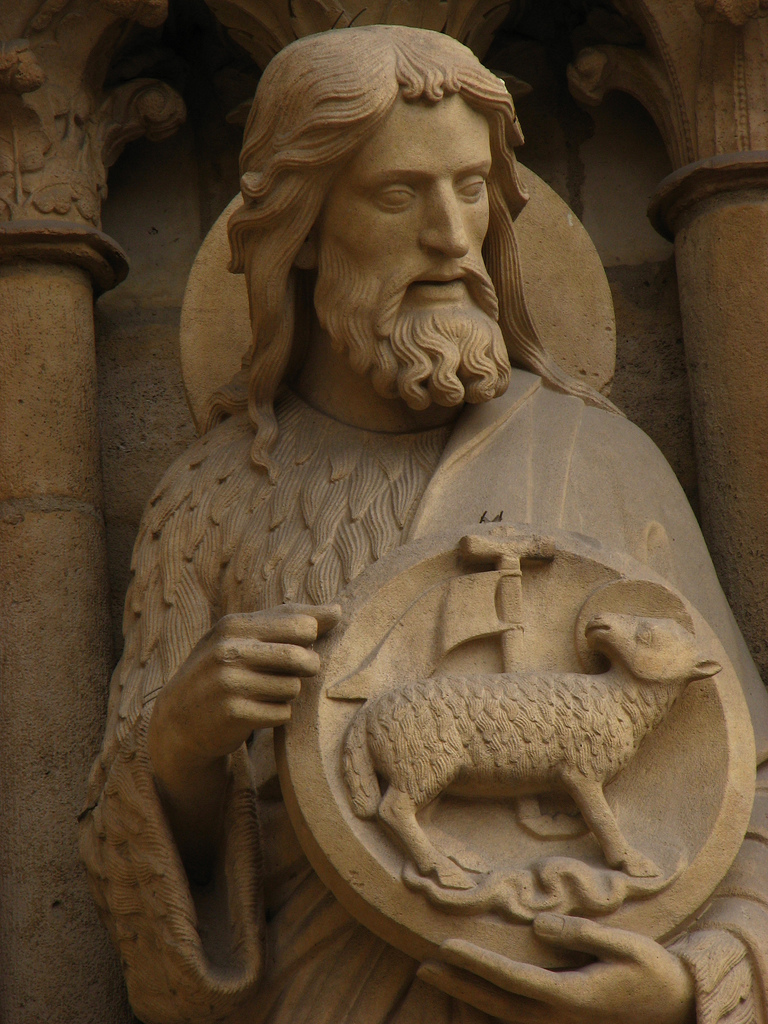
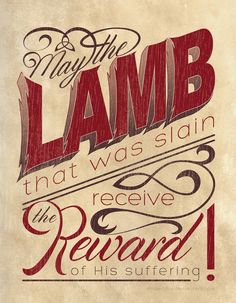
From Day 31 of Lent there was The Story of the Moravian Missionaries and their rallying call of “May the Lamb that was slain receive the reward of his suffering!” On Day 32 of Lent The Story continued with Nicolaus Ludwig von Zinzendorf’s call to Serve after he read the words, “I have done this for you; what have you done for me?” On Day 33 we finish the story with Devotion, after realizing Christ died for us and we, the Church are the reward of His suffering.
Acts 20:28 says that God purchased the church with Christ’s blood. “Take heed to yourselves and to all the flock, in which the Holy Spirit has made you overseers, to care for the church of God which he obtained with the blood of his own Son.” On the authority of this text we can say: Christ’s bleeding wounds were meant to purchase me. The Savior’s drops of blood were shed to obtain my redemption.”
Understanding that the Church of God is the reward of Christ’s suffering we realize we are not our own. We have been bought with a price. Redeemed from the wrath of God and the destination of eternal hell and given eternal life.
We are Christ’s reward and this truth moves our heart with devotion-an ardent, often selfless affection and dedication to Him.
Christ suffered to cleanse and beautify His people, His bride. “Husbands, love your wives as Christ loved the church and gave himself up for her, that he might sanctify her, having cleansed her by the washing of water with the word, that he might present the church to himself in splendor, without spot or wrinkle or any such thing, that she might be holy and without blemish.” Ephesians 5:25–27
What was the reward of His suffering? To sanctify His church that the holiness-spiritual beauty-of his people will be His reward. To present her to Himself in splendor; without spot or wrinkle, so His reward will be the beauty of His bride. The Church, Christ Bride, will be splendid and glorious at the marriage feast of the Lamb.
When ask what the most important commanded was, Jesus answered, “Love the Lord your God with all your heart and with all your soul and with all your strength and with all your mind.’ Are you loving Christ with all your might to render to Jesus the reward of his suffering—to offer up to him what He has purchased? Is your heart in tune with his heart, understanding what Christ suffered for, not that you would be blessed with health and wealth and live in a comfort zone of happiness-all outward things, but that you might be holy, spiritually beautiful, set apart for Him, becoming more and more like Him daily. He considered your holiness worth dying for; are you considering His love worth living for or do you neglect what he died to purchase?
So the reward of Christ’s sufferings is the holiness of his people. He suffered and bled and died to obtain a people and to make that people holy—clean and beautiful. Your holiness—your spiritual beauty—is the reward of his sufferings and the purchase of his blood.
This spiritually beautiful bride of Christ will be passionate for Good Deeds. “He offered himself as a sacrifice to free us from a dark, rebellious life into this good, pure life, making us a people he can be proud of, energetic in goodness.” Titus 2:11-14 (MSG) Or as the NIV translates, “He gave himself for us to redeem us from all iniquity and to purify for himself a people of his own who are zealous for good deeds.”
He gave himself to make a people zealous for good deeds. He shed his blood to purchase your passion for practical righteousness, for showing mercy, for benevolence and goodness and kindness, for courage and compassion. Notice this carefully: he did not die merely to get you to start trying harder, to stop doing some bad things or get you to do some good things. He died to change something in our spirit, to fan into flame a fire in us to serve, passionately.
“Teacher, which is the great commandment in the Law?” And Jesus said to him, “ ‘YOU SHALL LOVE THE LORD YOUR GOD WITH ALL YOUR HEART, AND WITH ALL YOUR SOUL, AND WITH ALL YOUR MIND.’ “This is the great and foremost commandment. “The second is like it, ‘YOU SHALL LOVE YOUR NEIGHBOR AS YOURSELF.’ “On these two commandments depend the whole Law and the Prophets.”
Christ suffered and bled and died to give you, the people who love Him, a zeal for doing good. Do you have a passion for doing good to people? The eternal good through being a witness of the good news of the gospel and a temporal good of serving others as a means to that end, that they too may be saved. How are you loving your ‘neighbors’? Are you denying Christ the reward of his sufferings by only serving yourself?
The passion of those early Moravian missionaries was zealous and peculiar. Zinzendorf made sure that they never forgot the blood of Jesus. They understood: my life, my holiness-spiritual beauty, my passionate love for others shown in service was purchased at the price of his blood. How can I not live for his honor with every breath I take! How can I not freely offer up to him what he has purchased with his blood and give Him wholehearted service?
Finally, the reward of Christ’s sufferings is a ransomed church from every tribe and tongue and people and nation. In Revelation 5:9 the Lamb of God is worshiped with these words, “You are worthy to take the scroll and to open its seals, because you were slain, and with your blood you purchased for God persons from every tribe and language and people and nation.”
We are the reward of Christ suffering, the redeemed of every tribe, tongue, people and nation, made spiritually beautiful and zealous for good works. The reward of His suffering is also the forgiveness of our sins (Ephesians 1:7), and justification by faith (Romans 5:9), and reconciliation with God (Romans 5:10), and cleansing of our consciences (Hebrews 9:14), and the final victory over Satan (Revelation 12:11).
When I first heard this story of the Moravian missionaries, I found in comparison my own heart had a terrible indifference to the price Jesus paid for my holiness and my zeal for service and my passion for world evangelism. Yet their inspirational parting cry to family and friends can becoming our meditative prayer of devotion; making a difference now in how we live for Him. “MAY THE LAMB THAT WAS SLAIN RECEIVE THE REWARD OF HIS SUFFERING.”
Lord Jesus, as your reward, may there be nothing we want more in life than what You suffered, bled and died to obtain. Let us love You with all our might to render to You with passion the reward of Your suffering; an inner holiness of a beautiful spirit, a zeal for service, a passion for witnessing to our world the good news of the gospel to the praise of Your glory. Amen
Leonard Dober and a carpenter named David Nitschmann were two young Moravian Missionaries who heard of an island in the West Indies where an atheist British owner had 3000 slaves. This slave owner had sworn, “No preacher, no clergyman, will ever stay on this island. If he’s ship wrecked we’ll keep him in a separate house until he has to leave, but he’s never going to talk to any of us about God, I’m through with all that nonsense.”
Three thousand slaves from the jungles of Africa brought to an island in the Atlantic and enslaved there to live and die without ever hearing the good news of Christ.
When these two young Moravians heard about it, they were so moved that they sold themselves to the British planter and used the money they received from their sale to pay their passage out to his island for he wouldn’t even transport them.
As the ship left its pier in the river at Hamburg and was going out into the North Sea carried with the tide, the Moravians had come from Herrenhut to see these two young men in their early twenties off. They would never return again, for this wasn’t a four-year term, they sold themselves into lifetime slavery. Their mission to simply live out their lives as slaves, they could be Christians where these others were who would never hear the hope of Christ. Their families and friends were there weeping, for they knew they would never see them again. And many there wondered why they were going and questioned the wisdom of such a supreme sacrifice.
As the housings had been cast off and were being curled up there on the pier, and the young men saw the widening gap between ship and shore, one lad with his arm linked through the arm of his fellow, raised his hand and shouted across the growing chasm the last words that were heard from them.
“MAY THE LAMB THAT WAS SLAIN
RECEIVE THE REWARD OF HIS SUFFERING!
MAY THE LAMB THAT WAS SLAIN
RECEIVE THE REWARD OF HIS SUFFERING!”
This became the call of Moravian missions. And this is the only reason for being. That the Lamb that was slain may receive the reward of His suffering!
Told by P. Reidhead
Moravian anthem: “We will follow the Lamb wherever He goes. May the Lamb that was slain receive the reward of His suffering.”
Crying is part of our human emotional package – but what triggers our tears when we are both sad – and happy? Get your tissues ready because weeping makes our noses run.
When a tear is produced from the lacrimal gland it spreads a moist film across your eye. Your tear then has two destinies; firstly it can drain-off down the lacrimal punctum, subsequently draining through your nose which makes your nose run or if weep, the overflow of fluid cascades over your eyelids and down your face. Crying can be scientifically defined as the shedding of tears in response to an emotional state; very different from the non-emotional shedding of tears ‘lacrimation’. So we have more than one type of tear. Basal tears keep the cornea nourished and lubricated, reflex tears wash out irritations or vapors like onions. Psychic, or ‘crying’ tears are produced in response to a strong emotion from stress, pleasure, anger, sadness and suffering to indeed, physical pain. Psychic tears even contain a natural painkiller, called leucine enkephalin which held you feel better after a good cry.
Without getting technical an emotional reaction triggers your nervous system, which in turn, orders your tear-producing system to activate and you cry.
Why did God give us tears? Is it a form of non-verbal communication to elicit help and support from those around you in your time of need. And doesn’t crying somehow solidify relationships with those sharing in an emotional experience? Just think about babies, they use crying as their first form of communication to the world. Haven’t you ever heard a newborn’s cry. The world takes notice of their pitifully soft, ‘Help me!’ Babies actually have three types of crying – the basic ‘hey you, pick me up’, the angrier, ‘do you have any idea how gross this diaper really feels’ and finally the painful ‘they say cutting teeth is the worst human pain imaginable’.
Tears are a responsive representation of what is going on inside us. Even the strongest among us break down and cry at times. It’s part of the human experience. It reveals not only our deep emotional connections with our world – past, present, and future – but allows us to visibly communicate the depth of which we feel about it. Crying is a signal God gave us to communicate we are feeling something deeply. And God always takes note of our tears.
O God. Thou tellest my wanderings: put thou my tears into thy bottle: are they not in thy book? When I cry unto thee, then shall mine enemies turn back: this I know; for God is for me. Psalm 56:7-10
No greater suffering has ever been experienced than that of Jesus, a “man of sorrows and acquainted with grief” Isaiah 53:3
Christ’s life was one continued series of sorrows, from the cradle to the cross. In His infancy His life was in danger from Herod, and his family fled to Egypt. His step father Joseph died and his birth was questioned as people called him names and said hurtful things to the Nazarene. His entire ministry was characterized by compassion for hurting people and the sorrow He felt from the hardness and unbelief of men’s hearts. He was rejected and continually opposed by the religious leaders, and the people were fickle; trying to crown Him king one day only to yell ‘crucify him’ the next. Even His own disciples doubted Him and in the end scattered in fear when He was arrested. The night before His crucifixion, He was “exceedingly sorrowful unto death” as He was tempted by Satan and contemplated the coming wrath and justice of God which would fall upon Him as He suffered and died for us. So great was His agony that His sweat was as great drops of blood. The greatest sorrow of His life was when on the cross He became sin and was separated from His Father to bear the wrath of God for us so that we might be redeemed.
But in the resurrection dawns a victorious Christ who proclaims, “He will wipe away every tear from their eyes; and there will no longer be any death; there will no longer be any mourning, or crying, or pain; the first things have passed away.” And He who sits on the throne said, “Behold, I am making all things new.” And He said, “Write, for these words are faithful and true.”
While life among sinful humanity in this world will never be perfect, we know that God is faithful and that when Christ returns, sorrow will be replaced with rejoicing (Isaiah 35:10). But in the meantime, we use our sorrow to glorify God (1 Peter 1:6-7) and rest in the Lord God Almighty’s grace and peace and the body of Christ’s care.
Say the word practice and I immediately think about football.
I’m from Texas. Here, we’re all about Friday night lights. We’ve got our Johnny Football, Gig Em Ags, Texas Fight, and ‘how ’bout them cowboys!’ My cell phone still sings out Hank’s, ‘Are You Ready For Some Football’ when my boys call. I cheered both of my sons from Pop Warner through Varsity, 3 knee surgeries, 2 broken arms, dislocated fingers, stitches, the dreaded concussion and six years of 2-a days. It’s really hot in Texas in August. Even if you get up before dawn to go to practice, it’s hot. Long, hard, tough, hot days of conditioning young bodies in the character building crucible of adversity. The repetitive grind of two-a-days prepares a player to compete at his full potential, to fight through fatigue, and to maintain sharpness and clarity under withering pressure.
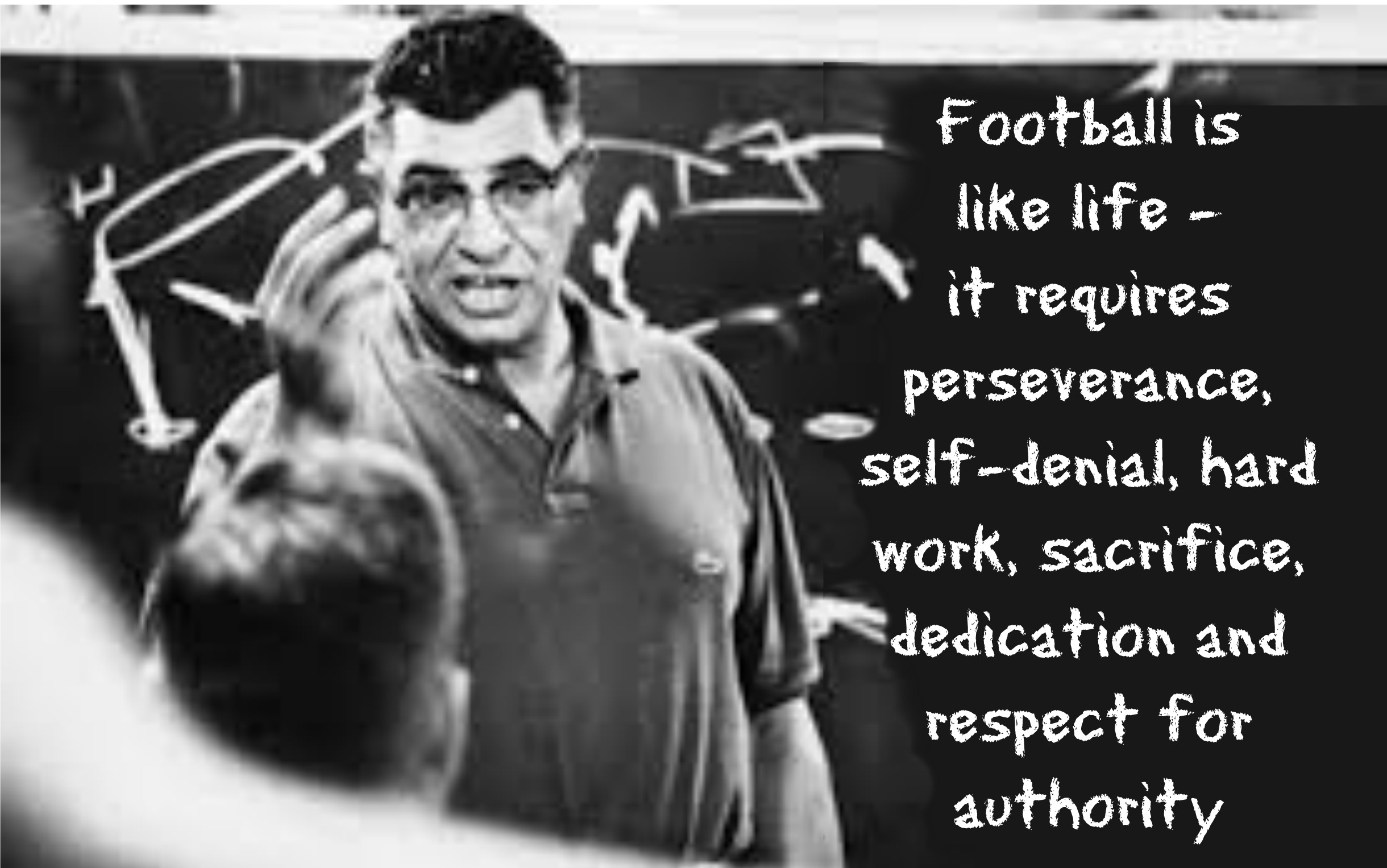
Vince Lombardi said, “Football is like life – it requires perseverance, self-denial, hard work, sacrifice, dedication and respect for authority.”
The two-a-day practice regimen is found in scripture too.
Psalm 1 talks about the man that is blessed, “His delight is in the law of the LORD, and on his law he meditates day and night . He is like a tree planted by streams of water, which yields its fruit in season and whose leaf does not wither. Whatever he does prospers.”
Two-a-days is the preparation for a season. Psalm 1 gives us the practices of a blessed man. He meditates on the Word of God day and night . Renewing our mind each morning with God’s word. Reviewing our day each evening in line with God’s word. It is God’s preparation for those who want to be blessed, who want God’s favor to rest upon them. Who want to be prepared to demolish strongholds and every argument and pretension that sets itself up against the knowledge of God (2 Cor 10:4). It is the practice which will not fail us in times of testing, it is the provision that gives us the Mind of Christ and the Love of God and the spirit of empowerment to be a witness to our world.
On the eve of a season, where Joshua would lead Israel into a promise land hostile with fierce opposition, Joshua received a pep talk from the Captain of Hosts. “Be strong and very courageous. Be careful to obey all the law my servant Moses gave you; do not turn from it to the right or to the left, that you may be successful wherever you go. Keep this Book of the Law always on your lips; meditate on it day and night, so that you may be careful to do everything written in it. Then you will be prosperous and successful. Have I not commanded you? Be strong and courageous. Do not be afraid; do not be discouraged, for the Lord your God will be with you wherever you go.” Joshua 1:7-9
With this charge God inspired Joshua and gave his people the strategy for victory. Meditate on God’s word day and night. If they carefully embrace His Word, reflect on it, and do it, then they will have courage to stand strong then they will be prosperous and successful and…God promised to be with them wherever they went.
Paul told the Philippians, “Finally, brethren, whatever is true, whatever is honorable, whatever is right, whatever is pure, whatever is lovely, whatever is of good repute, if there is any excellence and if anything worthy of praise, dwell on these things. The things you have learned and received and heard and seen in me, practice these things, and the God of peace will be with you.”
Again the charge is “practice these things, and the God of peace will be with you.”
Jesus tell us also, “Therefore everyone who hears these words of mine and puts them into practice is like a wise man who built his house on the rock…and nothing could shake it.”
Finally practice is the actual application or use of an idea, belief, or method, it is to repeat, repeat, repeat, to exercise a skill so as to acquire or maintain proficiency in it, and to continue to carry out or perform a particular activity, method, or custom habitually or regularly.
It is one thing to know it, another to believe it and still another to do it. PRACTICE is the actual application of what we know and believe.
“Do not merely listen to the word, and so deceive yourselves. Do what it says.” James 1:22
And remember, someone once said, “practice makes perfect.”
What are you hungry for?
The question pops up whenever we set out for dinner. Sometimes we have a clear preference. Sometimes we’re indifferent. Sometimes we are craving Chuy’s Chicka-Chicka Boom-Boom Enchiladas or Tim Love’s bulgogi beef at the Woodshed. Other times we are starving and the nearest fast food is all we can wait for. But never in my life have I ever gone hungry. So blessed to live in a country where the supermarkets are never out of food and easily accessible and the food court at the mall is like a mini-Epcot center of foreign choices. We are well fed.
But spiritually, what are you hungry for?
Is your heart in tune with David? “O God, You are my God; I shall seek You earnestly; My soul thirsts for You, my flesh yearns for You, In a dry and weary land where there is no water.” Psalms 63:1
Are you currently like a foreigner on a journey of faith that has lost his job or become disabled and provisions are shrinking. Maybe its chemotherapy that has your strength weakening and suddenly in this spiritual wilderness you find yourself really hungry. Famished for a word, any word at all from God, humbly realizing you were never really in control of your provisions when you were in your full strength. God is in control and now what you hunger for most is today’s promise that He will supply all that you need today. “He humbled you and let you be hungry, and fed you with manna which you did not know, nor did your fathers know, that He might make you understand that man does not live by bread alone, but man lives by everything that proceeds out of the mouth of the LORD.” Deut 8:3
Maybe you’ve been eating at the world’s banquet table and shopping at the world’s fashionable idol factories only to realize gluttonous, you are empty. Closet bursting, you have nothing to wear. You’ve had the latest and greatest all of a week and you’re already bored. Prov 27:20 reminds us, “Death and Destruction are never satisfied, and neither are human eyes.” But Jesus promises, “Blessed are those who hunger and thirst for righteousness, for they shall be satisfied.” Matthew 5:6
How can our spiritual hunger be satisfied?
“For the bread of God is that which comes down out of heaven, and gives life to the world.” Then they said to Him, “Lord, always give us this bread.” Jesus said to them, “I am the bread of life; he who comes to Me will not hunger, and he who believes in Me will never thirst.” John 6:33-35
Come daily to the Lord Jesus Christ and through relationship with Him talk about the things of the world you hunger and thirst for and ask Him to replace the appetite for those temporary things with a deep desire for His eternal things.
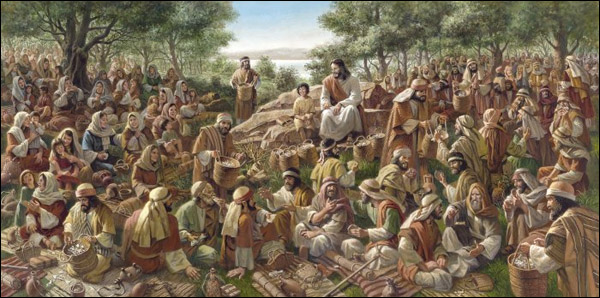
All 4 gospels give the account of the small boy who provided his small lunch—which was everything he had at the time—that became the bountiful feast that fed over 5,000 hungry people who had gathered to hear the Lord Jesus teach. Perhaps the boy thought he’d give all that he had to simply feed Jesus that day but his love and his faith were miraculously multiplied and all were satisfied.
“You will have plenty to eat and be satisfied and praise the name of the LORD your God, Who has dealt wondrously with you; Then My people will never be put to shame. “Thus you will know that I am in the midst of Israel, And that I am the LORD your God, And there is no other; And My people will never be put to shame.” Joel 2:26-27
“Our mouths were filled with laughter, our tongues with songs of joy. Then it was said among the nations, “The LORD has done great things for them.” Psalm 126:2
At the top of the list of favorite classic hymns is “Come, Thou Fount of Every Blessing,” which was written in 1757 by 22-year-old Robert Robinson, a newly converted ragamuffin who had recently become a Methodist preacher wrote this hymn to express his joy in his new faith but within the words we sense his internal struggle to remain faithful.
Come, Thou Fount of every blessing, Tune my heart to sing Thy grace; Streams of mercy, never ceasing, Call for songs of loudest praise. Teach me some melodious sonnet, Sung by flaming tongues above. Praise the mount, I’m fixed upon it, Mount of Thy redeeming love.
Sorrowing I shall be in spirit, Till released from flesh and sin, Yet from what I do inherit, Here Thy praises I’ll begin; Here I raise my Ebenezer; Here by Thy great help I’ve come; And I hope, by Thy good pleasure, Safely to arrive at home.
Jesus sought me when a stranger, Wandering from the fold of God; He, to rescue me from danger, Interposed His precious blood; How His kindness yet pursues me Mortal tongue can never tell, Clothed in flesh, till death shall loose me I cannot proclaim it well.
O to grace how great a debtor Daily I’m constrained to be! Let Thy goodness, like a fetter, Bind my wandering heart to Thee. Prone to wander, Lord, I feel it, Prone to leave the God I love; Here’s my heart, O take and seal it, Seal it for Thy courts above.
As much as I love the hymn in its original version I have found it ironic to see how the lyrics have wandered from the Robinson original. In our church hymnal we sing an updated version that dropped ‘Here I raise mine Ebenezer.’ The following version was adapted by E. Margaret Clarkson in 1973:
Hitherto Thy love has blessed me Thou has brought me to this place And I know Thy hand will bring me Safely home by Thy good grace Jesus sought me when a stranger, Wandering from the fold of God; He, to rescue me from danger, Bought me with His precious blood.
Basically in our Biblically illiterate age Ms Clarkson thought no one knew what Ebenezer meant , most linking it to Dicken’s character Ebenezer Scrooge. Do you know what it means? Do you know what the difference is in a rock and a stone? If I see a rock in the woods on a hike, it’s called a ‘rock’ but if I take it from its natural place and put it in my garden, it’s called a ‘stone’. The rock itself hasn’t changed but what it’s being used for has, that’s why its name has changed to a stone. Below is an Ebenezer stone of help a friend gave to me.
Ebenezer Stone of Help
This small stone sits on my desk but in 1 Samuel 7:12 tells us that the prophet took a large stone and placed it between the towns of Mizpah and Jeshanah. He named the stone Ebenezer, which means ‘the stone of help’ for he said, ‘up to this point the Lord has helped us.’ Many times in the Bible (the stories of Noah, Joshua, Jacob, and Samuel are just a few) a stone was used as a reminder of how God helped someone. An Ebenezer stone is anything that reminds us of how God has helped us in the past.
Opps.
See, I’m prone to wander.
Back to the point. The editorial Wandering from the original version of “Come, Thou Fount of Every Blessing.” Some hymn editors had a more serious reason to edit the original words of Robinson based on a theological complaint with the song. In several hymnals “wandering” is replaced with “yielded,” and “prone to wander” with “let me know Thee in Thy fullness”.
O to grace how great a debtor Daily I’m constrained to be! Let that grace, now, like a fetter, Bind my yielded heart to Thee. Let me know Thee in Thy fullness; Guide me by Thy mighty hand Till, transformed, in Thine own image In Thy presence I shall stand.
Those in the holiness movement disagreed with the lyrics that sing, “Prone to wander, Lord I feel it, prone to leave the God I love.” Mark Altrogge says, “Though I know believers are tempted to wander and tempted to be unfaithful to Christ at times, I don’t see that Scripture says we are still ‘prone’ to sin and wander.” Rather, “The Bible says believers are ‘prone’ to obey the God they love. Prone to follow Jesus.”
He cites Ezekiel 36:25-27 and these powerful words: I will sprinkle clean water on you, and you shall be clean from all your uncleannesses, and from all your idols I will cleanse you. And I will give you a new heart, and a new spirit I will put within you. And I will remove the heart of stone from your flesh and give you a heart of flesh. And I will put my Spirit within you, and cause you to walk in my statutes and be careful to obey my rules.
Ricky Alcantar defends the original lyrics as he looks to the context of that verse, showing that Robinson is pointing to a genuine tendency to wander. “Within our lives are these opposing desires to honor God and to honor self, to flee from sin and to flee to it. This is the simul justus et peccator of Martin Luther and the “wretched man that I am” of Romans 7. The fact that we are simultaneously righteous and sinful, sinful in our actions and yet righteous in our standing before God. In good conscience I can continue to sing that I am prone to wander.”
I think both sides have valid points, but I myself wish to sing with a voice poor in spirit as I lift begging hands up, ‘that God would bind my wandering heart to Him’. Within me is this constant competition, this brutal battle, between two “prones.”
I believe I am being renewed, being made like Christ, holy, and through God’s sanctifying power sin’s power is lessened as a greater preference toward holiness overwhelms the inclination to wander toward sin.
But also “I know that all God’s commands are spiritual, but I’m not. Isn’t this also your experience?” Yes. I’m full of myself—after all, I’ve spent a long time in sin’s prison. What I don’t understand about myself is that I decide one way, but then I act another, doing things I absolutely despise. So if I can’t be trusted to figure out what is best for myself and then do it, it becomes obvious that God’s command is necessary. But I need something more! For if I know the law but still can’t keep it, and if the power of sin within me keeps sabotaging my best intentions, I obviously need help!
I realize that I don’t have what it takes. I can will it, but I can’t do it. I decide to do good, but I don’t really do it; I decide not to do bad, but then I do it anyway. My decisions, such as they are, don’t result in actions. Something has gone wrong deep within me and gets the better of me every time. It happens so regularly that it’s predictable. The moment I decide to do good, sin is there to trip me up. I truly delight in God’s commands, but it’s pretty obvious that not all of me joins in that delight. Parts of me covertly rebel, and just when I least expect it, they take charge.
I’ve tried everything and nothing helps. I’m at the end of my rope. Is there no one who can do anything for me? Isn’t that the real question? The answer, thank God, is that Jesus Christ can and does. He acted to set things right in this life of contradictions where I want to serve God with all my heart and mind, but am pulled by the influence of sin to do something totally different. Romans 7:15-25 MSG
There are many areas in my life where I was once prone to wander, but am now prone to obey. This is not my doing. I know that I could never have tried hard enough to have victory over sin’s power over me by self effort. This spiritual growth is not some act of the will that has hardened me against wandering. Rather, this is the work of the Holy Spirit, by grace through faith giving me a greater preference toward holiness which overwhelms the inclination to wander toward sin. I realize that the temptation to wander will never be gone in my life, but there is no doubt a greater power that binds my heart to His. Love. I am loved by a great God that I come to love more and more and so I wander less and less. God’s love is a powerful testimony to the transforming grace of God.
King David the psalmist also wrote of this struggle to wander in His great anthem to the Scriptures, saying, “With my whole heart I have sought You; oh, let me not wander from Your commandments!” (Psalm 119:10) A man after God’s own heart, David clearly prays that God would keep him from wandering.
And Jesus affirms this wholehearted cry for help from the wanderers among us who beg for his tender love to bind us to Him. “Blessed are the poor in spirit, for theirs is the kingdom of heaven.”
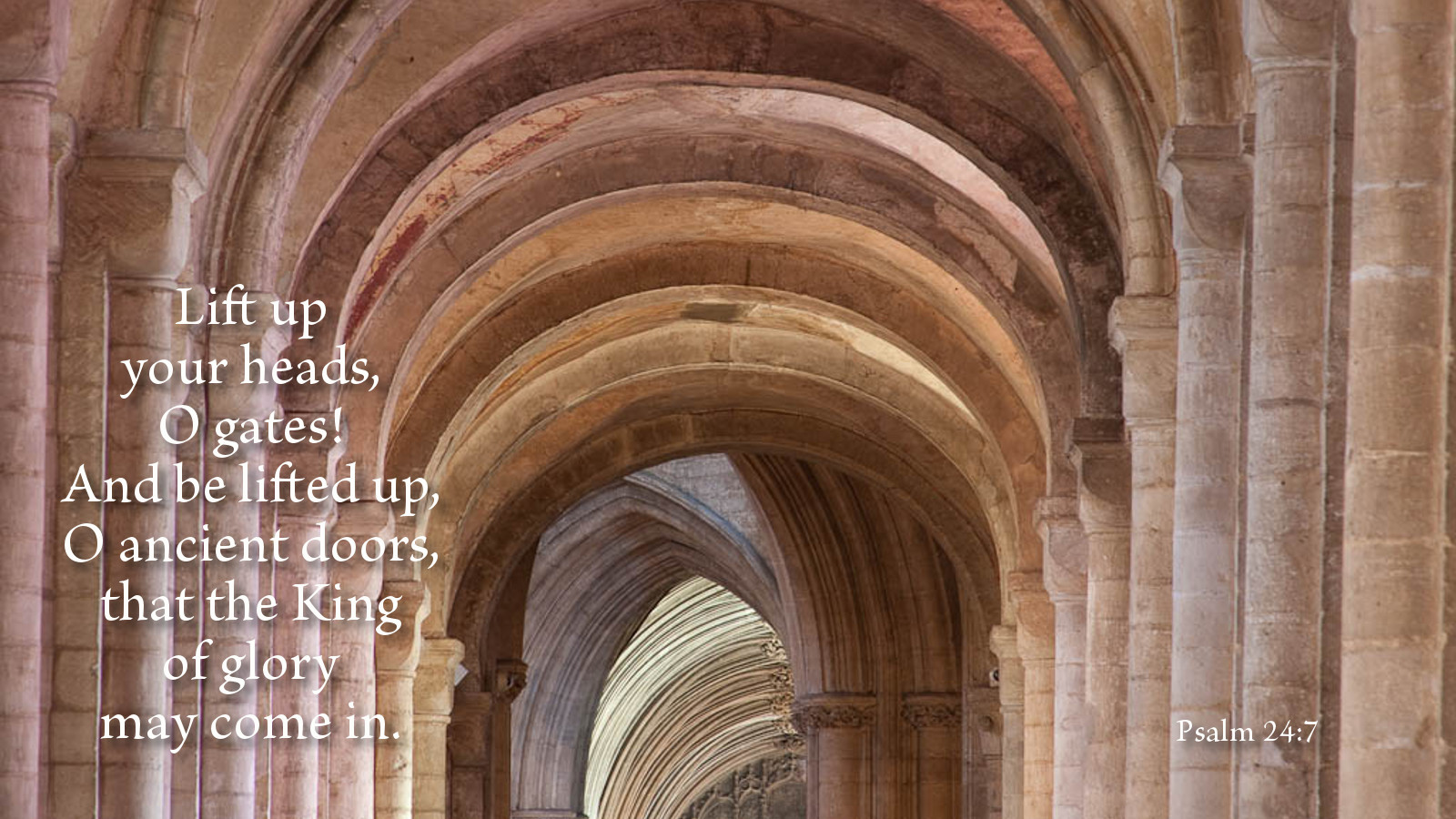
Lift up your heads, O ye gates; and be ye lift up, ye everlasting doors; and the King of glory shall come in.
Who is this King of glory? The LORD strong and mighty, the LORD mighty in battle. Lift up your heads, O ye gates;
Even lift them up, ye everlasting doors; and the King of glory shall come in. Who is this King of glory? The LORD of hosts, he is the King of glory. Selah.
David wrote this psalm for the splendid entry and return of the ark of the covenant into the tent David pitched for it, or the temple Solomon built for it.
“Lift up your heads, O ye gates.” Sang one half of a great choir, calling upon the gates to throw themselves wide open to their full height, that complete entrance might be given to the approaching sacred ark of God.
“And be ye lift up, ye everlasting doors.” Was the answering reply of the other half of the choir, giving the emphasis of repetition, and adding the “everlasting,” because the tabernacle was viewed as about to be continued in the temple, and the temple was designed to be God’s house “forever” (1 Kings 8:13).
“And the King of glory shall come in.” God was regarded as dwelling between the cherubim on the mercy-seat, where the Shechinah glory from time to time made its appearance. So the entrance of the ark into the tabernacle was thus the “coming in of the King of glory.”
The watchers at the gate hearing the song look over the battlements and ask, “Who is this King of glory?”
Who is He in person, nature, character, office and work?
What is his pedigree?
What his rank and what his heritage?
A question full of meaning and worthy of the meditations of all of eternity. The answer given in a mighty wave of music is,
“The Lord strong and mighty, the Lord mighty in battle.”
We know the might of God by the battles which He has fought, the victories He has won over sin, and death, and hell, and in response we clap our hands as we see him leading the Host of heavens armies, majestic and glorious in His victorious strength as he enters in.
Though David wrote this song for a specific occasion we can also apply it forward to the ascension of Christ into heaven. Our Redeemer found the gates of heaven shut, but having by his blood made atonement for sin, as one having authority, he now demands entrance. The angels were to worship him and ask with wonder at His arrival, Who is he? It is answered, that Christ is strong and mighty; mighty in battle to save his people, and to subdue His and their enemies, winning the great victory over death and sin.
We may apply it also to Christ’s entrance into the souls of men by his word and Spirit at salvation, that they may be his temples.
Behold, he stands at the door, and knocks, Rev 3:20. The gates and doors of man’s heart are to be opened to him, as possession is delivered to the rightful owner and Creator.
We may apply it to the broken spirit and contrite heart that God will not despise but instead the Spirit calls us to lift our faces up and receive the entrance of forgiveness and blessed favor of His love.
We may apply it to his second coming with glorious power. Lord, open the everlasting door to the Kingdom of Heaven that we may be numbered with the saints in glory and lifted up to You.
Who is this King of glory? The LORD of hosts, he is the King of glory.





 4jlkelly