Debit. Day 36 of Lent. Spiritual Accounting 101.
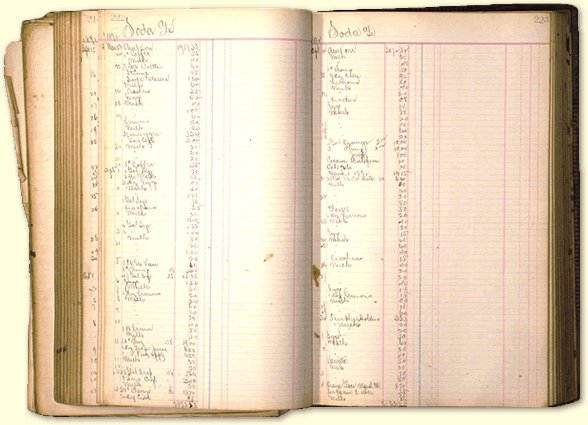
Debit is a bookkeeping term for the recording or an entry of debt in an account.
To understand its spiritual significance we first have to understand sin’s definition.
Sin is anything that is contrary to the law or will of God. If you do what God has forbidden, then you have sinned. If you do not do what God has commanded, you sin (James 4:17). Either way, the result is eternal separation from God (Isaiah 59:2). Sin is lawlessness (1 John 1:3) and unrighteousness (1 John 5:17). Sin leads to bondage (Rom. 6:14-20) and death (Rom. 6:23). Everyone who sins is breaking God’s law, for all sin is contrary to the law of God. 1 John 3:4
Sin is breaking the law of God.
Sin, breaking the law of God, is a legal debt.
In Luke 11:4 it says, “And forgive us our sins (hamartia) . . . ” Jesus equates sin with debt. We can think of it as each sin is a debt recorded as an entry in a ledger. At some point that debt will come due for payment.
Legal debts can be transferred.
Sin is a legal debt and because legal debts can be transferred that is why Jesus could bear our sins in His body on the cross (1 Peter 2:24). Through faith we believe this and are justified.
Justified is a legal standing before the Law.
To be justified is to be declared legally righteous. It is a divine act where God declares the sinner to be innocent of his sins. It is not that the sinner is now sinless but that he is “declared” sinless legally. This justification is based on the shed blood of Jesus, ” . . . having now been justified by His blood . . . ” (Rom. 5:9). When God sees the Christian, He sees him through the sacrifice of Jesus and “sees” him without sin. This declaration of innocence is not without cost, for it required the satisfaction of God’s Law, ” . . . without shedding of blood there is no forgiveness,” (Heb. 9:22). In justification, the justice of God fell upon Himself—Jesus, the Son of God. Justification is a legal act of imputing the righteousness of Christ to the believer (Rom. 4:11; Phil. 3:9).
To impute means to reckon to someone the blessing, curse, debt, etc., of another.
Adam’s sin is imputed to all people (Rom. 5:12-21). Therefore, we are effectively all guilty before God. Our sins were put upon, imputed, to Jesus on the cross. He became sin on our behalf (2 Cor. 5:21) and died with them (Isaiah 53:4-6). Our sins were dead and buried with Jesus Christ in the tomb. Therefore, our sins are forgiven. Understanding imputation is very important. Imputation is the means of our salvation. Our sins were put upon, imputed, to Jesus on the cross. Our sins, the legal debt we owed, were “given” to Jesus to pay for. When He died on the cross, our sins, in a sense, died with Him. The righteousness that was His through His perfect obedience to the Father in His complete obedience to the Law is imputed, given, to us and legally put in our account. In short, our sins were given to Jesus. His righteousness was given to us.
To sum it up:
Sin is breaking the law of God and is a legal debt.
Sin is a legal debt and because legal debts can be transferred that is why Jesus could bear our sins in His body on the cross.
Through faith we believe this and are justified.
To be justified is to be declared legally righteous.
Justification is a legal act of imputing the righteousness of Christ to the believer.
To impute means to reckon to someone the debt of another.
Our sins/legal debt were transferred to Jesus.
His righteousness was given to us.
Now that our debt is paid, “Let no debt remain outstanding, except the continuing debt to love one another, for whoever loves others has fulfilled the law.” Romans 13:8
He paid a debt He did not owe;
I owed a debt I could not pay;
I needed someone to wash my sins away. “Amazing Grace.”
Christ Jesus paid a debt that I could never pay.
Hymn by: Ellis J. Crum
 4jlkelly